


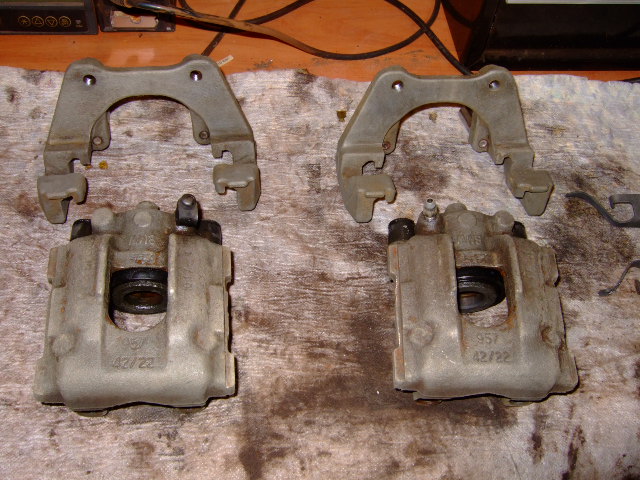
Sandblasting calipers
Moderator: martauto
-
DanThe
- E30 Zone Team Member

- Posts: 28641
- Joined: Sat Sep 10, 2005 11:00 pm
- Location: Staffs
- Contact:
Chemical de-rusting is the way to go for calipers, wont damage the bores, here is an engine block I had done
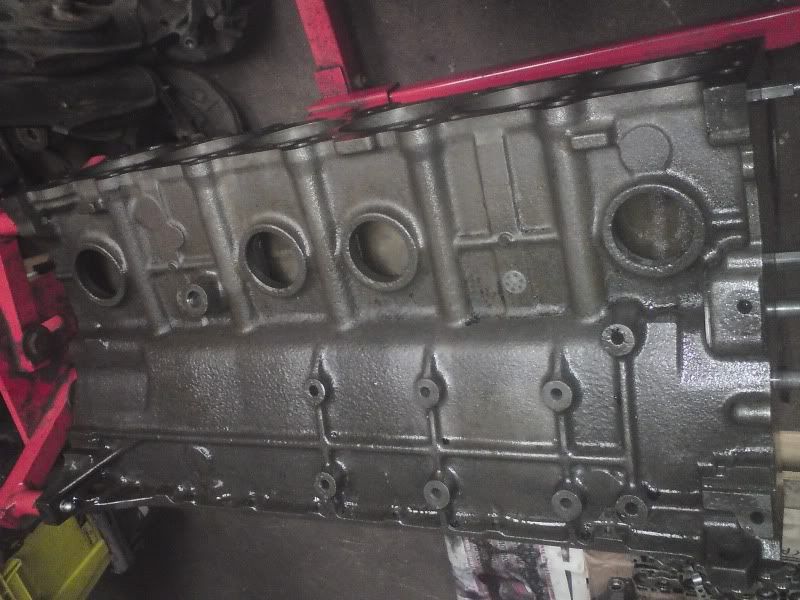
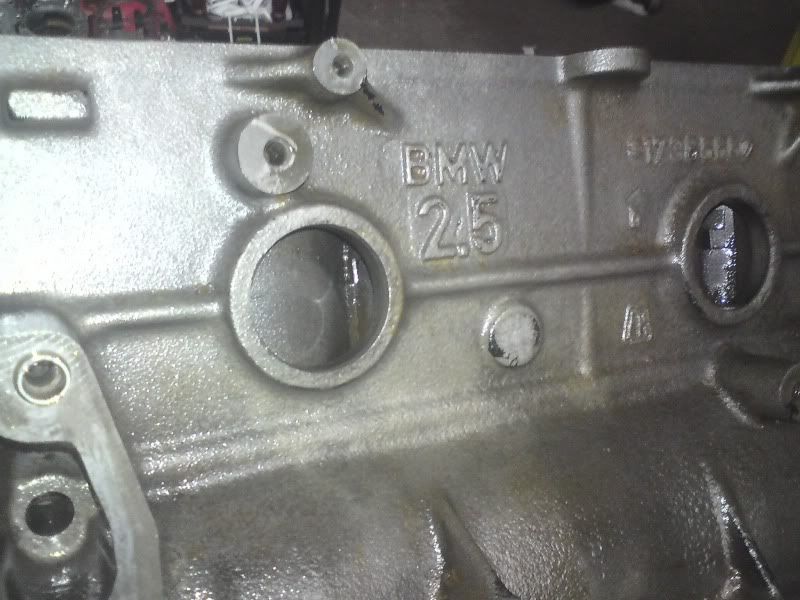
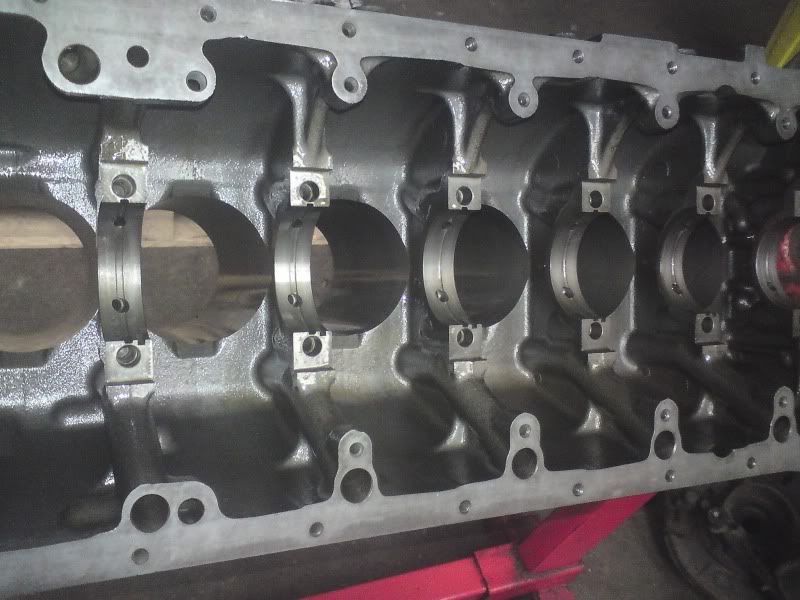
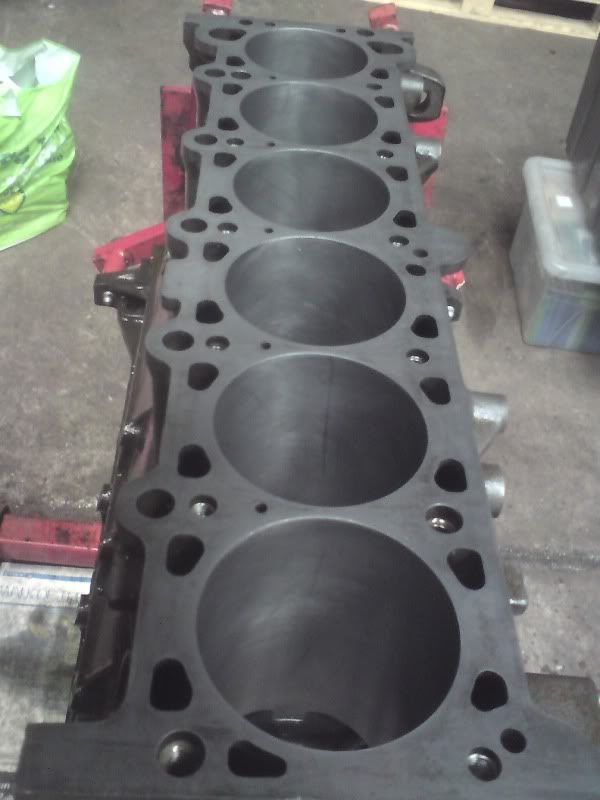
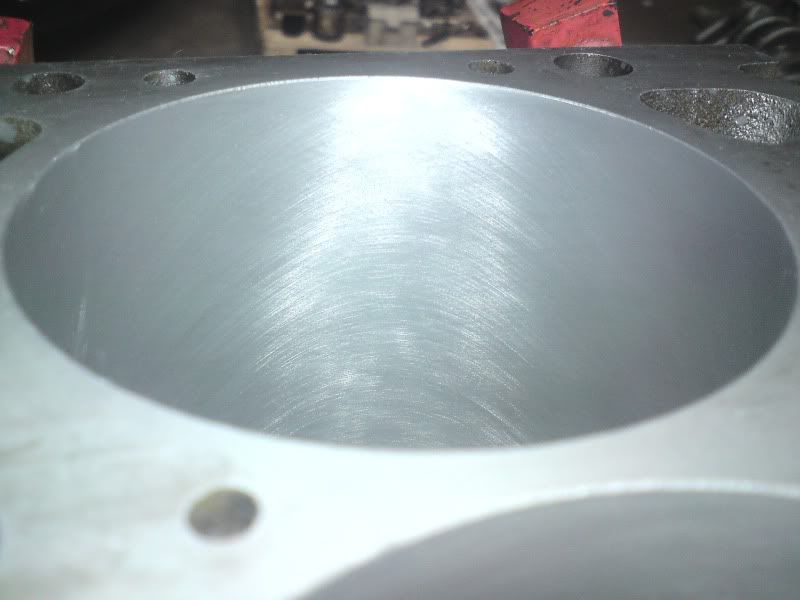
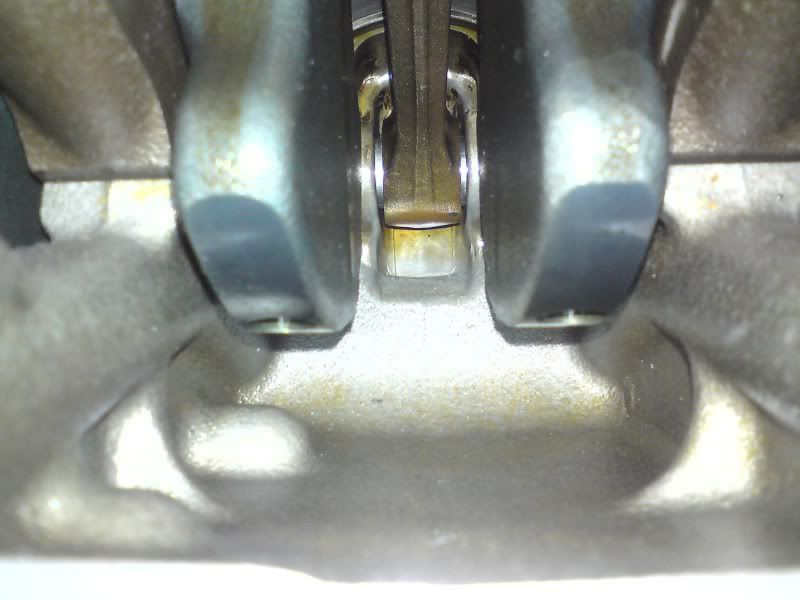
Ive got some calipers ive had done also, just need to get them coated properly now, ive had them done in standard zinc before and it doesnt last, so will be looking for a nickel or cadmium type coating this time
Ive got some calipers ive had done also, just need to get them coated properly now, ive had them done in standard zinc before and it doesnt last, so will be looking for a nickel or cadmium type coating this time


-
Brianmoooore

- E30 Zone Team Member
- Posts: 49358
- Joined: Mon Jan 10, 2005 11:00 pm
A simple electrolysis tank will clean callipers up like new in about two days!
Plastic container, one tablespoon of washing (or baking, at a push) soda to a gallon of water, a DC power supply (battery charger isn't ideal, but will do), connect the negative lead to the calliper, the positive to a piece of scrap steel or iron (not stainless), turn on the power and leave, apart from turning the calliper around a few times, as the main rust conversion takes place on the area nearest the scrap iron anode.
Good steel/iron isn't affected by the process.
Plastic container, one tablespoon of washing (or baking, at a push) soda to a gallon of water, a DC power supply (battery charger isn't ideal, but will do), connect the negative lead to the calliper, the positive to a piece of scrap steel or iron (not stainless), turn on the power and leave, apart from turning the calliper around a few times, as the main rust conversion takes place on the area nearest the scrap iron anode.
Good steel/iron isn't affected by the process.
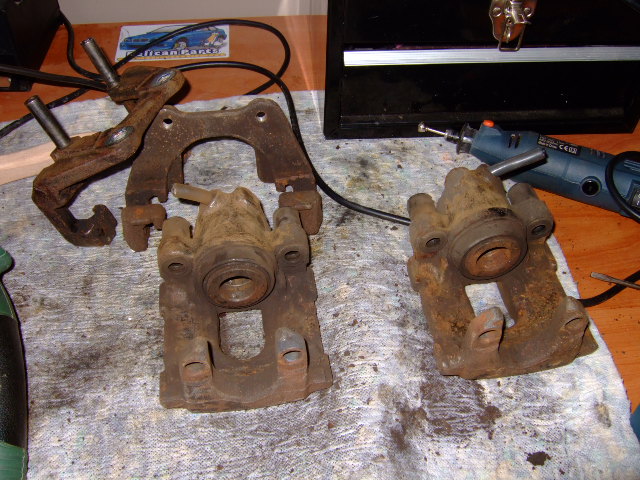
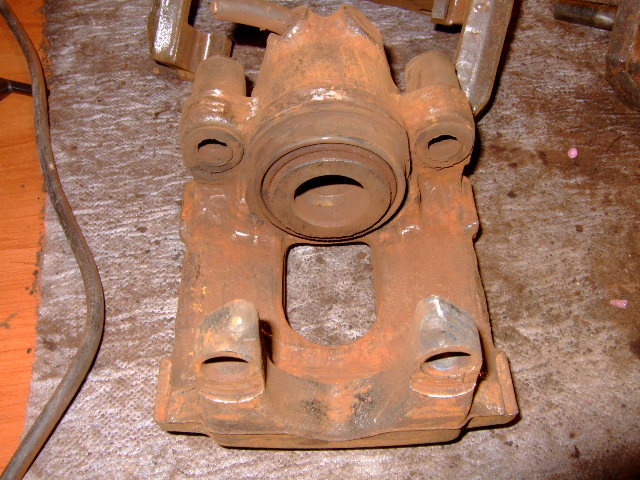
Brian any guide on Volt/amp settings for this process to be most effective?Brianmoooore wrote:A simple electrolysis tank will clean callipers up like new in about two days!
Plastic container, one tablespoon of washing (or baking, at a push) soda to a gallon of water, a DC power supply (battery charger isn't ideal, but will do), connect the negative lead to the calliper, the positive to a piece of scrap steel or iron (not stainless), turn on the power and leave, apart from turning the calliper around a few times, as the main rust conversion takes place on the area nearest the scrap iron anode.
Good steel/iron isn't affected by the process.
hmm, i quite like the electrolysis idea, particulalry as i'm restoring a camper and have all sorts of rusty scrap to try and save!
what sort of power do you need? would a car battery be man enough to power a small bath for cleaning nuts, bolts and brackets?
what sort of power do you need? would a car battery be man enough to power a small bath for cleaning nuts, bolts and brackets?
cheers,
harry
harry
-
Speedtouch
- Old Skooler

- Posts: 14080
- Joined: Tue Feb 14, 2006 11:00 pm
- Location: Canterbury
Another alternative is to leave them to soak for a couple of days in a bowl of vinegar or even Coca-Cola; the mild acid dissolves away the rust.
I did this with a pair of rusty VW Beetle 1302S calipers and they came up quite well.
I did this with a pair of rusty VW Beetle 1302S calipers and they came up quite well.
///M aurice
ECU Upgrade EPROM Chips, £40 posted within the UK. Note these are not Zone chips.
viewtopic.php?f=6&t=279421
ECU Upgrade EPROM Chips, £40 posted within the UK. Note these are not Zone chips.
viewtopic.php?f=6&t=279421
This is what you need mate. I've got one of these up and running now. Cheaper than a car battery too.harry_p wrote:hmm, i quite like the electrolysis idea, particulalry as i'm restoring a camper and have all sorts of rusty scrap to try and save!
what sort of power do you need? would a car battery be man enough to power a small bath for cleaning nuts, bolts and brackets?
http://www.ebay.co.uk/itm/300744930504? ... 826wt_1344
-
Brianmoooore
- E30 Zone Team Member
- Posts: 49358
- Joined: Mon Jan 10, 2005 11:00 pm
The PSU above is the exact same spec. and appearance as the one I use, and this is more than capable of powering up a full size domestic bath, which I use for rear subframes, front wings, fuel tanks and the like.
Ideally you need several anodes (scrap pieces of iron or steel - not stainless (releases dangerous heavy metal salts)), placed around the sides of the bath, to completely surround the part being cleaned up.
The electrical connections to the scrap iron (crocodile clips) must not be immersed in the solution, are all connected together and to the positive terminal of the PSU.
The negative terminal of the PSU is connected to the piece being de rusted, and this crocodile clip can be immersed in the solution.
The most scaled up piece of rusty equipment imaginable can be place in the solution, without any preparation whatsoever, except for cleaning up a place to allow the croc. clip to make contact, eventually leaving a black surface which needs cleaning up with a scrubbing brush and water, to leave a bright steel or iron surface.
The anodes become a furred up orange mess, as does the solution, but if left for a couple of days afterwards, the rubbish sinks to the bottom, leaving solution that can be used again.
The soda solution isn't 'used up' in any way, and can be used indefinitely.
The advantage over all the chemical methods, apart from cost, is that the weak soda solution is virtually harmless to everything. The solution doesn't affect painted parts at all, but if things like fuel tanks are processed, you will find that large areas of paint are lifted off, because of microscopic holes in the paint with pre existing surface rust forming under the paint, that are converted by the process.
I usually turn the voltage up on the PSU until I get a current of about 2A, which equates to a voltage of anywhere between about 3 volts and 30 volts, but there are no hard and fast rules - as long as a current is flowing, the process will work.
Ideally you need several anodes (scrap pieces of iron or steel - not stainless (releases dangerous heavy metal salts)), placed around the sides of the bath, to completely surround the part being cleaned up.
The electrical connections to the scrap iron (crocodile clips) must not be immersed in the solution, are all connected together and to the positive terminal of the PSU.
The negative terminal of the PSU is connected to the piece being de rusted, and this crocodile clip can be immersed in the solution.
The most scaled up piece of rusty equipment imaginable can be place in the solution, without any preparation whatsoever, except for cleaning up a place to allow the croc. clip to make contact, eventually leaving a black surface which needs cleaning up with a scrubbing brush and water, to leave a bright steel or iron surface.
The anodes become a furred up orange mess, as does the solution, but if left for a couple of days afterwards, the rubbish sinks to the bottom, leaving solution that can be used again.
The soda solution isn't 'used up' in any way, and can be used indefinitely.
The advantage over all the chemical methods, apart from cost, is that the weak soda solution is virtually harmless to everything. The solution doesn't affect painted parts at all, but if things like fuel tanks are processed, you will find that large areas of paint are lifted off, because of microscopic holes in the paint with pre existing surface rust forming under the paint, that are converted by the process.
I usually turn the voltage up on the PSU until I get a current of about 2A, which equates to a voltage of anywhere between about 3 volts and 30 volts, but there are no hard and fast rules - as long as a current is flowing, the process will work.

-
Brianmoooore
- E30 Zone Team Member
- Posts: 49358
- Joined: Mon Jan 10, 2005 11:00 pm
If the rust is protected by oil or grease (or wax) it won't get removed, but there's no problem removing the rust that's exposed, then degreasing, and repeating the process. Metal that's already been de rusted won't be damaged by being exposed to the process again.

-
e301988325i
- E30 Zone Addict

- Posts: 3701
- Joined: Fri Feb 01, 2008 11:00 pm
- Location: Taunton, Somerset
I understand copper is the answer, a couple of microns all over (including in the bores) and you're away. No idea why or where I found out about itDanThe wrote:Ive got some calipers ive had done also, just need to get them coated properly now, ive had them done in standard zinc before and it doesnt last, so will be looking for a nickel or cadmium type coating this time
 .
.I said:
Can anyone suggest how to test if the boot lights are staying on with the boot shut?
e30topless said:
lock the wife in there
Can anyone suggest how to test if the boot lights are staying on with the boot shut?
e30topless said:
lock the wife in there
-
milescook
- E30 Zone Camper

- Posts: 1285
- Joined: Thu Jan 13, 2011 11:00 pm
- Location: The 'bran of Cwm
- Contact:
Crikey! As top tips go.....Brianmoooore wrote:A simple electrolysis tank will clean callipers up like new in about two days!
Plastic container, one tablespoon of washing (or baking, at a push) soda to a gallon of water, a DC power supply (battery charger isn't ideal, but will do), connect the negative lead to the calliper, the positive to a piece of scrap steel or iron (not stainless), turn on the power and leave, apart from turning the calliper around a few times, as the main rust conversion takes place on the area nearest the scrap iron anode.
Good steel/iron isn't affected by the process.
I now have something to do on the weekend
The story so far... http://www.cookracing.co.uk/
Also please help the race budget by watching some videos https://www.youtube.com/cookracinguk
Also please help the race budget by watching some videos
https://www.youtube.com/cookracinguk
-
Brianmoooore
- E30 Zone Team Member
- Posts: 49358
- Joined: Mon Jan 10, 2005 11:00 pm
I know of a disused swimming pool.Morat wrote:I wonder if I could find a tank big enough for my whole touring.....
-
milescook
- E30 Zone Camper
- Posts: 1285
- Joined: Thu Jan 13, 2011 11:00 pm
- Location: The 'bran of Cwm
- Contact:
Having a go.think my battery charger is no good for this kind of thing,comes up battery damaged,couldn't even feel any current on my tounge.not that I tried of course...
But my spare battery is hooked up instead and you can see the positive metal fizzing. The charger is charging the battery! Is this stupid / clever idea going to blow up?
But my spare battery is hooked up instead and you can see the positive metal fizzing. The charger is charging the battery! Is this stupid / clever idea going to blow up?
The story so far... http://www.cookracing.co.uk/
Also please help the race budget by watching some videos https://www.youtube.com/cookracinguk
Also please help the race budget by watching some videos
https://www.youtube.com/cookracinguksounds electrifyingmilescook wrote:Having a go.think my battery charger is no good for this kind of thing,comes up battery damaged,couldn't even feel any current on my tounge.not that I tried of course...
But my spare battery is hooked up instead and you can see the positive metal fizzing. The charger is charging the battery! Is this stupid / clever idea going to blow up?

-
DanThe
- E30 Zone Team Member
- Posts: 28641
- Joined: Sat Sep 10, 2005 11:00 pm
- Location: Staffs
- Contact:
Hair raising stuff....scjimbo wrote:sounds electrifyingmilescook wrote:Having a go.think my battery charger is no good for this kind of thing,comes up battery damaged,couldn't even feel any current on my tounge.not that I tried of course...
But my spare battery is hooked up instead and you can see the positive metal fizzing. The charger is charging the battery! Is this stupid / clever idea going to blow up?
-
Brianmoooore
- E30 Zone Team Member
- Posts: 49358
- Joined: Mon Jan 10, 2005 11:00 pm
Some 'smart' battery chargers may have a problem powering the tank directly. Give it a battery to charge as well, as you have done, and it should work OK.
-
milescook
- E30 Zone Camper
- Posts: 1285
- Joined: Thu Jan 13, 2011 11:00 pm
- Location: The 'bran of Cwm
- Contact:
Cheers! Been a few hours in the mixing bowl I mean professional de-rusting tank. certainly turning the water Orange! Will leave it overnight and report back, out of excitement more than anything!
The story so far... http://www.cookracing.co.uk/
Also please help the race budget by watching some videos https://www.youtube.com/cookracinguk
Also please help the race budget by watching some videos
https://www.youtube.com/cookracinguk
I used bilthamber deox-c on a few parts with good results. Few parts i did came out looking like this:
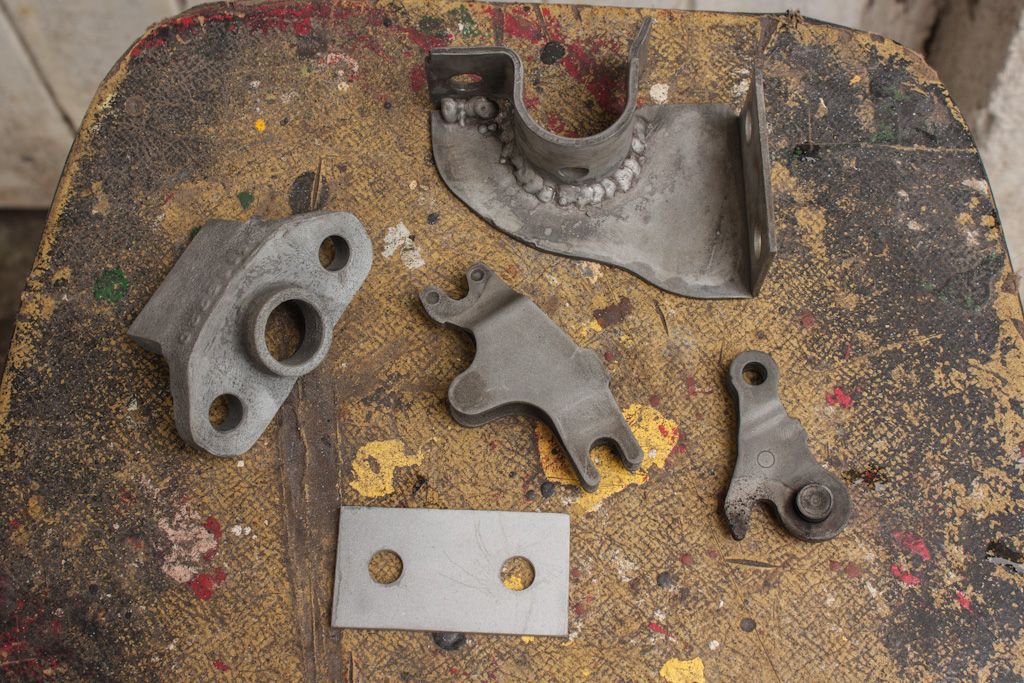
The battery method looks good also, maybe better than the deox method!
I wonder can a complete diff be submerged in water to receive de-rusting treatment?
The battery method looks good also, maybe better than the deox method!
I wonder can a complete diff be submerged in water to receive de-rusting treatment?

-
Speedtouch
- Old Skooler
- Posts: 14080
- Joined: Tue Feb 14, 2006 11:00 pm
- Location: Canterbury
Care to show us the results?scjimbo wrote:
Cheers again Brian. Top Tip there.
///M aurice
ECU Upgrade EPROM Chips, £40 posted within the UK. Note these are not Zone chips.
viewtopic.php?f=6&t=279421
ECU Upgrade EPROM Chips, £40 posted within the UK. Note these are not Zone chips.
viewtopic.php?f=6&t=279421
Absolutely. I'll post some up tomorrow night when its been in for another day. I deliberately did half and half to get a comparison.Speedtouch wrote:Care to show us the results?scjimbo wrote:
Cheers again Brian. Top Tip there.
-
Speedtouch
- Old Skooler
- Posts: 14080
- Joined: Tue Feb 14, 2006 11:00 pm
- Location: Canterbury
Cool. What is it, a rear beam?
///M aurice
ECU Upgrade EPROM Chips, £40 posted within the UK. Note these are not Zone chips.
viewtopic.php?f=6&t=279421
ECU Upgrade EPROM Chips, £40 posted within the UK. Note these are not Zone chips.
viewtopic.php?f=6&t=279421