bumhole wrote:Tonight (just finished

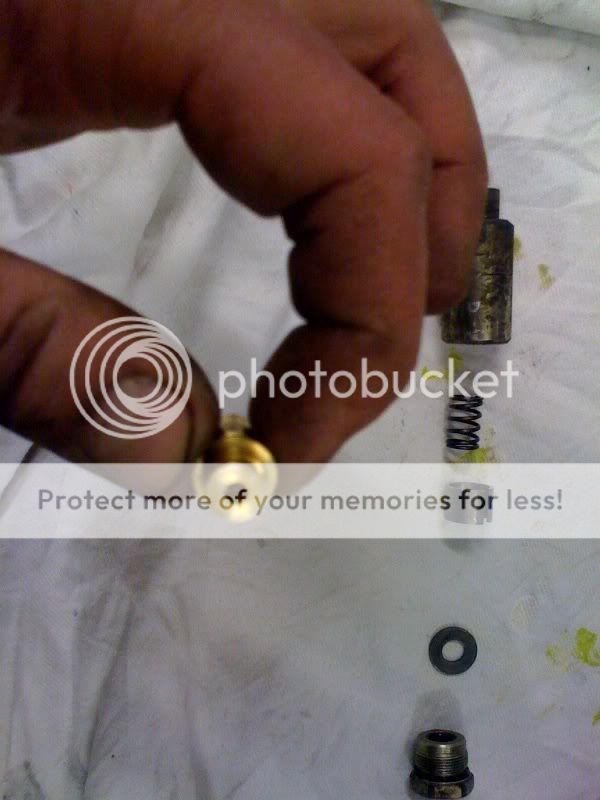
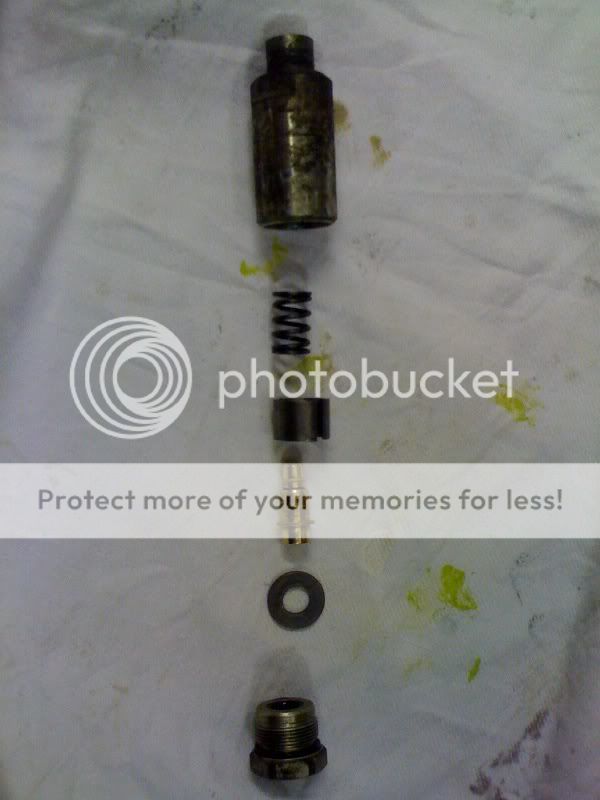
) Took apart the bias valve like Geoffbob said and put it back together minus internal bits. Made a smidge of difference, it seemed slightly harder for the engine to keep the wheels turning. Today I bought some new discs and already had some new ferrodo pads. I put them on next and they seem to have made it again, slightly harder for the engine to keep the wheels turning but still they wont stall it. The handbrake will though! bonus! Possibility that new discs and pads need bedding in before they will bite.
Any other ideas very much appreciated. What if the spacer I made for the master cylinder (with clio servo) was too short? What are the chances of the master cylinder being shafted?
OK, the fact that you still aren't getting enough fluid pressure to the rear callipers (with the valve internals omitted) tells us that your valve is not to blame for any of this. Likewise, the fact that you can stall the engine by pulling up the handbrake tells me that the problem is not your pads or discs. Yes, I realise that the shoes are separate from the pads, but if a new pair of shoes can brake the wheel, then a new pair of pads most certainly will too (regardless of whether they are bedded in or not).
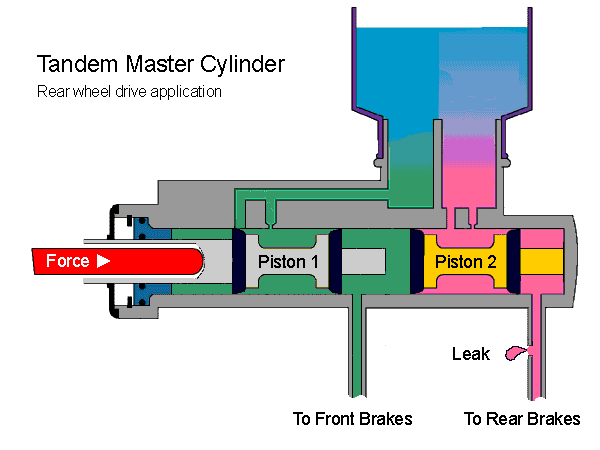
Your problem then, most undoubtedly, lies with either your M/C or the braided lines that you have installed. From your above posts I think you have already ruled our your new hydraulic lines and thus I would suggest that the operation of the rear fluid circuit of your M/C is questionable. I wasn't aware, TBH, that you were using a Clio servo. However, if your M/C is able to deliver sufficient fluid pressure to operate your front callipers, then I would expect the rear pressure to be similar (assuming the M/C is working as it should). What I am saying here is that if your front brakes are working, then your spacer is correct. The reason I say this is because of the way a Tandem M/C works (see that link I posted in one of my earlier posts - click on the arrows in the diagrams to animate them). In short, provided the centre piston is free-floating (not jammed or seized) the fluid pressure in your front and rear hydraulic circuits
should be identical (assuming the primary and secondary sections of the tandem M/C have the same diameter).
So what does all this mean? It means that:
a) if your spacer is too short (and your M/C is in good health) then
both your front
and rear line pressure could be too low!! or,
b) Your spacer is correct but the M/C is faulty.
These suggestions assume, however, that you have already thoroughly ruled out the possibility of blocked or leaking fluid lines, jammed calipers,
and that your rear hydraulic line has been correctly bled.
One way to diagnose your problem further would be to disconnect each of the lines, one at a time, and temporarily attach a pressure gauge (with bleed nipple). You'll find such a thing available from specialist hydraulic shops.






 ).
).




 )and I found air trapped in the ABS pump.
 it's me age...