
Quaife ATB Diff ?
Moderator: martauto
-
stratos

- E30 Zone Newbie

- Posts: 87
- Joined: Sat Jun 02, 2007 11:00 pm
- Location: Pembrokeshire
Has anyone got an opinion on the Quaife ATB diff or any experience of using one for for competition ( race )?
318 is.
-
GeoffBob
- Forced Induction Specialist
- Posts: 1843
- Joined: Tue Apr 28, 2009 11:00 pm
Yes. Much better than the clutch type ZF LSD due to the way the torque is transferred from the wheel losing traction to the one with traction.stratos wrote:Has anyone got an opinion on the Quaife ATB diff or any experience of using one for for competition ( race )?
See my earlier thread on LSD's here
Third post down includes a link to the most recent Quaife patent that explains how the Quaife ATB mechanism works.
What is important to understand is that a clutch type LSD will effectively lock (hard and fast) your two drive wheels together when one or the other wheel loses a certain amount of traction.
A Quaife on the other hand will progressively transfer torque in direct proportion to the amount of traction lost at one drive wheel, over to the other wheel. It is, to a certain degree, a form of traction control. And since it is a progressive thing it won't catch you out like a clutch type LSD will on the track.
On the down side - a Quaife is lousy on ice or any surface with limited traction (but then it was never designed for that).

"It is amazing how many drivers, even at the Formula-1 level, think that brakes are for slowing the car down." - Mario Andretti
-
martinpallot
- E30 Zone Regular

- Posts: 352
- Joined: Sat Aug 04, 2007 11:00 pm
- Location: Jersey C.I
Useless for competition purposes, mainly because if one wheel lifts then it will act just like an open diff. would agree that its better than a strandard 25% lock bmw item.
-
GeoffBob
- Forced Induction Specialist
- Posts: 1843
- Joined: Tue Apr 28, 2009 11:00 pm
Sorry Martin, but I am afraid I have to disagree with you on that one (just a comment, I really don't mean to start an argument).martinpallot wrote:Useless for competition purposes, mainly because if one wheel lifts then it will act just like an open diff.
While it is true that lifting a wheel with a Quaife will result in wheel-spin, if a car is lifting a drive-wheel then its either over an obstacle, or the suspension is setup incorrectly. In my opinion, the benefits of a Quaife outweigh any cost incurred in the unlikely event of either the above.
To the best of my understanding, the Quaife ATB diff has been well received by the motorsport fraternity. To quote No Limit Motorsport, "The Quaife ATB Differential has been proven in everything from SCCA Rally to Formula 1. The Quaife ATB Differential provides autocrossers with such an advantage, it has become "required" equipment for a winning effort."
A further example is Nick Leason who uses a Quaife on his BTCC BMW.

"It is amazing how many drivers, even at the Formula-1 level, think that brakes are for slowing the car down." - Mario Andretti
-
agent006

- E30 Zone Regular
- Posts: 701
- Joined: Thu Mar 10, 2005 11:00 pm
- Location: Cheltenham
Excellent example with a picture of Nick being lapped.... again. Do we know what diff the RAC and Airwaves BMWs use?
-
kimbo
- E30 Zone Newbie
- Posts: 150
- Joined: Fri Aug 03, 2007 11:00 pm
Err - kerbs?GeoffBob wrote:Sorry Martin, but I am afraid I have to disagree with you on that one (just a comment, I really don't mean to start an argument).martinpallot wrote:Useless for competition purposes, mainly because if one wheel lifts then it will act just like an open diff.
While it is true that lifting a wheel with a Quaife will result in wheel-spin, if a car is lifting a drive-wheel then its either over an obstacle, or the suspension is setup incorrectly. In my opinion, the benefits of a Quaife outweigh any cost incurred in the unlikely event of either the above.

In my experience, the Quaife requires a softer setup with more 'droop' on the wheels to maintain traction. Not ideal if you're using rear ARB.

For race use I'd stick with a plate diff and play with the settings until a compromise is found. Each to their own, though.

Kim.
p.s. The team that bought our old race car off of us blew up the diff (Gemini plate) and replaced it with a Quaife and have suffered with excessive wheelspin and tyre wear since.
Luckily I've got a spare Gemini in stock, so they have that option if they wish to spend the money. FWD car, but the morals the same, in my view.
-
Jon_Bmw
- Dangerous when thinking

- Posts: 7604
- Joined: Tue Jan 11, 2005 11:00 pm
- Location: Salisbury
Kimbo it is much easier to lift an driven wheel in a a FWD car though... I use a plate diff on a FWD and it is great, but crap on the road(thankfully it only drives to and from events).
I am pretty sure plate diffs are universily preferred(and presumably better?) than a quaife type diff for competition.
I am pretty sure plate diffs are universily preferred(and presumably better?) than a quaife type diff for competition.
-
GeoffBob
- Forced Induction Specialist
- Posts: 1843
- Joined: Tue Apr 28, 2009 11:00 pm
Play fair gents. It goes without saying that the intended application is a RWD e30. FWD is a totally different kettle of fish.
Spend much time on the kerb do we Kimbo?
Spend much time on the kerb do we Kimbo?
"It is amazing how many drivers, even at the Formula-1 level, think that brakes are for slowing the car down." - Mario Andretti
-
Cook318IS
- E30 Zone Addict
- Posts: 4586
- Joined: Fri Jun 08, 2007 11:00 pm
- Location: Torquay
My mate has a citreon saxo... (not quite the same i know) but its about 190bhp (with nos) and he has a quaife lsd and internals in his gearbox. The internals are very well made i'd say... he's cracked 3 gearboxes so far but all the internals appear to take the power well.

-
mt1104
- E30 Zone Regular
- Posts: 469
- Joined: Sun Jan 13, 2008 11:00 pm
- Location: Eastleigh
I thought quailfe solved the whole 'loosing drive if one wheel gets in the air' thing with its latest designs?
BMW 318 2dr Atlantis blue road rally car
-
GeoffBob
- Forced Induction Specialist
- Posts: 1843
- Joined: Tue Apr 28, 2009 11:00 pm
I receivd the following response from Kevin Bird at Birds Auto, from whom I bought my Quaife, when I raised the issue of lifting a wheel:
. I did, however, do a lot of homework into the various aftermarket diffs for the e30. I even went as far as to download patent documents to see how the different types of diff work. I firmly believe that the new design (2003) Quaife will progressively earn the respect of both professional and amateur drivers alike. But this is only my opinion.
And before anyone asks, no, I do not own shares in either Quaife of Birds AutoKevin Bird wrote:Nick Leason had us convert the BMW Motorsport diff which was misbehaving with the Drexler diff, making the car unstable and difficult to drive out of slow corners. We installed the Quaife ATB, and he reported that he could use all the power driving out of slow corners after that. Regrettably, lack of sponsorship didn't allow him to finish the 2009 series, and prove the installation properly.
James Thorpe ran his Quaife ATB diff equipped 130i to a brilliant 15th place agains Moslers, M3 GTs and the like. 3rd in his class. See http://www.astonmartinracing.com/eng/re ... tcar24hour
BBC Top gear ran their 24hour race with Quaife installed. See http://www.topgear.com/uk/tv-show/series-10/episode-9
Mike Salmon converted his E36 M3 race car, removing the modified ZF diff and replacing with Quaife during his 2007 campaign. Can't find any relevant links. He was recommended to do this by Dave Ellis, who had already converted a similar car with strong results. I believe this is the car/driver here http://www.serverware-racing.co.uk/page ... ar0407.asp
On the subject of "lifting wheels", I would comment that there would have to be something seriously wrong with a RWD suspension setup car if the car lifted a rear wheel. That's not a problem you would ever see in practice. I have tested my own track prepared M3 with both ZF clutches LSD and the Quaife. The ZF would always lock up suddenly and loose all rear grip on tight, slippery corners, completely destabilising the car and required me to completely get off the throttle. With the Quaife installed, that eliminated that problem, and I could then easily modulate the throttle depending on the level of grip.
With every solution for any technical issue, there will always be advantages and disadvantages. This hypothetical loss of performance due to wheel lifting would only ever be disadvantageous if the car suspension was deliberately set up without consideration to the whole dynamic characteristic of the chassis and driveline.
I also noticed that the rear end became much more stable under braking. With the ZF, I often used to get rear ABS activation under hard braking on slippery surfaces. With the Quaife, the problem never appeared again, and on those slippery conditions, both front and rear brakes had similar amounts of ABS intervention.
. I did, however, do a lot of homework into the various aftermarket diffs for the e30. I even went as far as to download patent documents to see how the different types of diff work. I firmly believe that the new design (2003) Quaife will progressively earn the respect of both professional and amateur drivers alike. But this is only my opinion."It is amazing how many drivers, even at the Formula-1 level, think that brakes are for slowing the car down." - Mario Andretti
-
N00b
- E30 Zone Addict
- Posts: 3954
- Joined: Wed Oct 22, 2008 11:00 pm
- Location: Purgatory
Does anyone have an approximate price for the Quaife part?
-
N00b
- E30 Zone Addict
- Posts: 3954
- Joined: Wed Oct 22, 2008 11:00 pm
- Location: Purgatory
^^^
Scratch that, I found it.
Scratch that, I found it.
-
kimbo
- E30 Zone Newbie
- Posts: 150
- Joined: Fri Aug 03, 2007 11:00 pm
GeoffBob wrote:Play fair gents. It goes without saying that the intended application is a RWD e30. FWD is a totally different kettle of fish.
Spend much time on the kerb do we Kimbo?

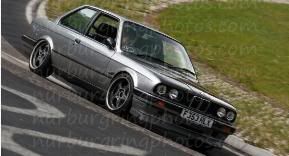
Its the only way to get a time round some tracks. Not relevant for trackday, I know. Above is at Thruxton, Snet is the same - got to ride the kerbs leading on to the start / finish straight to carry the speed, or you lose out for the first half of the lap.

In another life, I spend a lot of time marshalling at hillclimbs and it isn't at all unusual to see a rwd car pick up it's inside rear wheel on the tighter corners - particularly Ashes at Gurston Down, an uphill (obviously) left hander which the camber drops away from on the exit.
Anyhow, as I said earlier, each to their own, but we'll stick with our plate diff.
Kim
edit - not trying to pretend thats me, by the way, just illustrating that its not unusual for wheels to be in the air!!
-
GeoffBob
- Forced Induction Specialist
- Posts: 1843
- Joined: Tue Apr 28, 2009 11:00 pm
Excellent picture Kimbo! Point well taken, thanks for that.
I had in mind however that the advantage provided by a Quaife (in particular its ability to power out of slippery corners, due to the way it distributes torque) would more than offset the resultant loss of traction on the outside (edit, sorry, I mean inside) drive wheel during an event such as that shown above. Looking at that pic I am not so sure (not that I would ever have the balls to drive like that, so that's definitely not me in that car either )
I currently have a ZF clutch type diff on the rear of my car (what you call a plate diff?) but plan to swap it for my new Quaife before I put her back on the track (have been finishing off some paint and GRP work during our winter months). Based upon the mechanics of the two types of diff I am, however, convinced at this time that the Quaife is superior, but the proof of the pudding, as they say, is in the eating - which could produce and altogther different result. I'll be sure to report back on how I feel the two compare to each other. Will only be my opinion though (as a function of my own driving skills) and whether that amounts to a hill of beans is another story .
I had in mind however that the advantage provided by a Quaife (in particular its ability to power out of slippery corners, due to the way it distributes torque) would more than offset the resultant loss of traction on the outside (edit, sorry, I mean inside) drive wheel during an event such as that shown above. Looking at that pic I am not so sure (not that I would ever have the balls to drive like that, so that's definitely not me in that car either
)I currently have a ZF clutch type diff on the rear of my car (what you call a plate diff?) but plan to swap it for my new Quaife before I put her back on the track (have been finishing off some paint and GRP work during our winter months). Based upon the mechanics of the two types of diff I am, however, convinced at this time that the Quaife is superior, but the proof of the pudding, as they say, is in the eating - which could produce and altogther different result. I'll be sure to report back on how I feel the two compare to each other. Will only be my opinion though (as a function of my own driving skills) and whether that amounts to a hill of beans is another story
.
Last edited by GeoffBob on Thu Oct 22, 2009 4:51 pm, edited 1 time in total.
"It is amazing how many drivers, even at the Formula-1 level, think that brakes are for slowing the car down." - Mario Andretti
-
mt1104
- E30 Zone Regular
- Posts: 469
- Joined: Sun Jan 13, 2008 11:00 pm
- Location: Eastleigh
I was under the impression a rear wheel drive car should ideally raise its inside front wheel in hard cornering and a front wheel drive car should raise its inside rear wheel (like the clio does) if the suspension is set up correctly.
In either case, if a driven wheel is raised under power, your going to get into trouble no matter what diff is in the transmission.
In either case, if a driven wheel is raised under power, your going to get into trouble no matter what diff is in the transmission.
BMW 318 2dr Atlantis blue road rally car
-
stratos
- E30 Zone Newbie
- Posts: 87
- Joined: Sat Jun 02, 2007 11:00 pm
- Location: Pembrokeshire
Thank you for your replys - very interesting. So far I am on the side of the Quaife which sounds like it should be used with a decent set up and vehicle dynamics. The car currently weighs 850 kg ( without fuel or driver ) but is relativly front end heavy. I ran the car at a sprint at Llandow (as a bit of a systems check)with an open diff and of course it had very little traction - very entertaining !
318 is.
-
GeoffBob
- Forced Induction Specialist
- Posts: 1843
- Joined: Tue Apr 28, 2009 11:00 pm
Hi Stratos,
I am in the process of fitting my new Quaife ATB diff to a spare "medium case" final drive. I am documenting everything as I go along, which may be of some help to you. You can see my car here. There's a pic of the Quaife on page 3. The car has a similar weight to yours and I experienced similar problems to yourself with an open diff. I currently have a clutch type ZF diff fitted, which is a big improvement, but will soon replace it with the new Quaife. I am keen to do an objective comparison of the ZF to the Quaife once I get my Quaife fitted.
BTW, I have studied the patent document of John Quaife in minute detail and for the life of me I cannot see how it is possible for the diff to become "open" with one wheel raised off the ground - at least not while a substantial torque is applied to the diff input shaft.
Certainly, with the vehicle stationary and one drive-wheel raised off the ground it will seem to behave like an open diff, but I challenge anyone to blip the throttle and see if it doesn't try to jump its axle-stand. I could be wrong about this (and this is certainly a test that I plan to try once my Quaife ATB diff is fitted), but I do believe that the current Quaife design (as detailed in Michael Quaife's most recent patent) has addressed the above much debated issue. This is basically as mt1104 said in his earlier post.
If anyone has deeper insight into this matter, or "actual experience" of a Quaife ATB diff in a RWD car, please post it up. I have e-mailed John Quaife to try and get his response but I am not holding my breath for a reply. He has already had enough problems with people copying his invention that I doubt he wants to answer questions on how it works.
I am in the process of fitting my new Quaife ATB diff to a spare "medium case" final drive. I am documenting everything as I go along, which may be of some help to you. You can see my car here. There's a pic of the Quaife on page 3. The car has a similar weight to yours and I experienced similar problems to yourself with an open diff. I currently have a clutch type ZF diff fitted, which is a big improvement, but will soon replace it with the new Quaife. I am keen to do an objective comparison of the ZF to the Quaife once I get my Quaife fitted.
BTW, I have studied the patent document of John Quaife in minute detail and for the life of me I cannot see how it is possible for the diff to become "open" with one wheel raised off the ground - at least not while a substantial torque is applied to the diff input shaft.
Certainly, with the vehicle stationary and one drive-wheel raised off the ground it will seem to behave like an open diff, but I challenge anyone to blip the throttle and see if it doesn't try to jump its axle-stand. I could be wrong about this (and this is certainly a test that I plan to try once my Quaife ATB diff is fitted), but I do believe that the current Quaife design (as detailed in Michael Quaife's most recent patent) has addressed the above much debated issue. This is basically as mt1104 said in his earlier post.
If anyone has deeper insight into this matter, or "actual experience" of a Quaife ATB diff in a RWD car, please post it up. I have e-mailed John Quaife to try and get his response but I am not holding my breath for a reply. He has already had enough problems with people copying his invention that I doubt he wants to answer questions on how it works.
"It is amazing how many drivers, even at the Formula-1 level, think that brakes are for slowing the car down." - Mario Andretti
-
e21Jason
- E30 Zone Addict
- Posts: 2040
- Joined: Tue Jan 11, 2005 11:00 pm
- Location: Dubai, UAE
I aways thought quaife and most diffs all have some form of preload to stop the issue with 1 wheel being frictionless
Jason
Jason
-
GeoffBob
- Forced Induction Specialist
- Posts: 1843
- Joined: Tue Apr 28, 2009 11:00 pm
Yes. In fact, the preload on the current Quaife design is adjustable by means of set-screws. This is the improvement to the original Quaife design that is at the heart of the 2003 patent. In the patent document the adjustment is defined for the purposes of a mild to aggressive setup. With the set-screws all the way in (and stiffer Bellville springs) the diff comes very close to being fully locked (and likely results in excessive tyre wear) and is recommended only for very slippery conditions. Winding the setscrews out reduces the pre-load and is recommended for a daily driver.
Adjusting the set-screws can only be done with the diff removed from the casing. 'Would be nice to have a knob on the dash (similar to the brake bias adjuster) to adjust the diff. Off course, with a hydraulic (viscous) diff, this is possible.
Adjusting the set-screws can only be done with the diff removed from the casing. 'Would be nice to have a knob on the dash (similar to the brake bias adjuster) to adjust the diff. Off course, with a hydraulic (viscous) diff, this is possible.
"It is amazing how many drivers, even at the Formula-1 level, think that brakes are for slowing the car down." - Mario Andretti
-
Jon_Bmw
- Dangerous when thinking
- Posts: 7604
- Joined: Tue Jan 11, 2005 11:00 pm
- Location: Salisbury
I wonder if the problem with quaifes spinning the inside wheel up is the fact the engine easily overcomes that preload torque-thus spinning the wheel.
On a friends metro VVTI with a quaife he was definately complaining of spinning the inside wheel(FWD) and that is on a corner weighted car. This was tight turns on a tarmac rally stages. I suspect the issue is less profound with RWD due to physics.
It is horses for courses, all I know is that I look a right prat when manouevering my 205. BANG BANG BANG
On a friends metro VVTI with a quaife he was definately complaining of spinning the inside wheel(FWD) and that is on a corner weighted car. This was tight turns on a tarmac rally stages. I suspect the issue is less profound with RWD due to physics.
It is horses for courses, all I know is that I look a right prat when manouevering my 205. BANG BANG BANG
-
Jhonno
- Homo Hair
- Posts: 20362
- Joined: Mon Jan 10, 2005 11:00 pm
- Location: FLAT, FLAT, FLAT!!
Jon_Bmw wrote:all I know is that I look a right prat when driving my 205

-
GeoffBob
- Forced Induction Specialist
- Posts: 1843
- Joined: Tue Apr 28, 2009 11:00 pm
Jon, from what I understand (from the patent) a Quaife ATB diff won't stop you from spinning an inside wheel if the torque at that wheel exceeds the tyres available traction. To prevent the inside drive-wheel slipping your friend needs to fit stickier tyres or adjust his ARB's so that less weight shifts to the outside while cornering.Jon_Bmw wrote:I wonder if the problem with quaifes spinning the inside wheel up is the fact the engine easily overcomes that preload torque-thus spinning the wheel.
What the Quaife ATB diff will do, however, is to redistribute a percentage of the torque from the slipping wheel back to the outside wheel. it doesn't elimate slip, but it does optimise the amount of power the engine can put to the ground. Unfortunately, you pay for this (if you use it) in the form of tyre wear.
A plate/clutch type diff, on the other hand, will tend to minimise slippage at the inside wheel by simply locking the two output shafts hard and fast to each other. The disadvantage of this is the harshness of the mechanism and the resultant effect upon the stability of the vehicle, particularly when powering out of corners. Locking the two output shafts together (via the clutch mechanism) may be the best way to stop the inside wheel from spinning, but it isn't the best way to power through a corner (simply because two wheels that are locked together can't follow a path around a circle). In other words, locking two wheels together (to prevent slipage) doesn't maximise the amount of power the car can put down on the ground.
"It is amazing how many drivers, even at the Formula-1 level, think that brakes are for slowing the car down." - Mario Andretti
-
billgatese30
- E30 Zone Team Member

- Posts: 10989
- Joined: Sun Jan 09, 2005 11:00 pm
- Location: Tyne & Wear
To be fair though Geoff, they are only locked by a certain amount, (i.e. 25% on a std e30 diff), its not like it is acting like a spool when it engages (unless you have it set ridiculously high on purpose).GeoffBob wrote:Locking the two output shafts together (via the clutch mechanism) may be the best way to stop the inside wheel from spinning, but it isn't the best way to power through a corner (simply because two wheels that are locked together can't follow a path around a circle). In other words, locking two wheels together (to prevent slipage) doesn't maximise the amount of power the car can put down on the ground.
I know what you are trying to say though.

-
GeoffBob
- Forced Induction Specialist
- Posts: 1843
- Joined: Tue Apr 28, 2009 11:00 pm
Sorry Bill, you are quite right.billgatese30 wrote:To be fair though Geoff, they are only locked by a certain amount, (i.e. 25% on a std e30 diff), its not like it is acting like a spool when it engages (unless you have it set ridiculously high on purpose).GeoffBob wrote:Locking the two output shafts together (via the clutch mechanism) may be the best way to stop the inside wheel from spinning, but it isn't the best way to power through a corner (simply because two wheels that are locked together can't follow a path around a circle). In other words, locking two wheels together (to prevent slipage) doesn't maximise the amount of power the car can put down on the ground.
I know what you are trying to say though.
Where I have used the term "hard and fast" above I mean that the transition from open to locked is sudden. It's an on/off type of thing, with very little in between. I don't mean to imply that they are solidly locked together. Looking back I can see how this might read - my mistake.
The Quaife is stated as being capable of up to 80% lock, but varies progressively from 20% (factory pre-load) up to the full 80% as a function of the difference in torque between the two output shafts. Its begining to make sense to me why the Quaife has a reputation for eating tyres (80% lock is not far off from a spool). A very tight corner (at speed) could eat a lot of rubber.
Last edited by GeoffBob on Thu Oct 22, 2009 6:53 pm, edited 2 times in total.
"It is amazing how many drivers, even at the Formula-1 level, think that brakes are for slowing the car down." - Mario Andretti
-
billgatese30
- E30 Zone Team Member
- Posts: 10989
- Joined: Sun Jan 09, 2005 11:00 pm
- Location: Tyne & Wear
GeoffBob wrote:Sorry Bill, you are quite right. I didn't mean that they were totally locked together.billgatese30 wrote:To be fair though Geoff, they are only locked by a certain amount, (i.e. 25% on a std e30 diff), its not like it is acting like a spool when it engages (unless you have it set ridiculously high on purpose).GeoffBob wrote:Locking the two output shafts together (via the clutch mechanism) may be the best way to stop the inside wheel from spinning, but it isn't the best way to power through a corner (simply because two wheels that are locked together can't follow a path around a circle). In other words, locking two wheels together (to prevent slipage) doesn't maximise the amount of power the car can put down on the ground.
I know what you are trying to say though.
Where I have used the term "hard and fast" in my earlier posts I mean that the transition from open to locked is relatively sudden. It's an on/off type of thing, with very little in between. I don't mean to imply that they are solidly locked together. Looking back I can see how this might read - my mistake.
The Quaife is stated as being capable of up to 80% lock, but varies progressively from 20% (factory pre-load) up to the full 80% as a function of the difference in rotational speed between the two output shafts. Its begining to make sense to me why the Quaife has a reputation for eating tyres (80% lock is not far off from a spool). A very tight corner (at speed) could eat a lot of rubber.
I know what you were getting at, I just thought I would point it out for anyone else who may have grasped the wrong idea.
-
Jon_Bmw
- Dangerous when thinking
- Posts: 7604
- Joined: Tue Jan 11, 2005 11:00 pm
- Location: Salisbury
But what percentage? My friends experience is that it was costing him time as he was wasting a fair bit of exit speed spinning one wheel. The reason I didn't go with one is that they are not that highly regarded for FWD cars from what I have read. Most people who use a quaife 205 for more than just on the road get frustrated with them. But as I eluded to earlier, I think it is due the inherrent problems with FWD rather than the diff per se.GeoffBob wrote:Jon_Bmw wrote:I wonder if the problem with quaifes spinning the inside wheel up is the fact the engine easily overcomes that preload torque-thus spinning the wheel.
What the Quaife ATB diff will do, however, is to redistribute a percentage of the torque from the slipping wheel back to the outside wheel. it doesn't elimate slip, but it does optimise the amount of power the engine can put to the ground. Unfortunately, you pay for this (if you use it) in the form of tyre wear.
I am not sure that I will ever completely understand all of the theory behind these diffs(without that book you reccomended!) so I went on what works for my car from other peoples experiences.
With regards the metro and the engine
 It is a crazy little thing, only hindered by its afformentioned problem and the class that it ends up in due to its capacity
 -
GeoffBob
- Forced Induction Specialist
- Posts: 1843
- Joined: Tue Apr 28, 2009 11:00 pm
A percentage that varies from 20% (factory pre-load) to 80% according to the difference in torque between the two output shafts. Meaning that the greater the torque difference between the two output shafts the greater the percentage coupling between the two sun gears (and thus output shafts). This is the Quaife's party trick - its ability to vary the amount of lock (and thus optimise power delivery to the ground)Jon_Bmw wrote:But what percentage?GeoffBob wrote:What the Quaife ATB diff will do, however, is to redistribute a percentage of the torque from the slipping wheel back to the outside wheel. it doesn't elimate slip, but it does optimise the amount of power the engine can put to the ground. Unfortunately, you pay for this (if you use it) in the form of tyre wear.
Sorry, I wrote "according to the difference in rotational speed between the two output shafts" in my previous post, and then edited it. The Quaife is, of course, torque dependant, not velocity.
Jon, I value and repsect the fact that you prefer a plate LSD. I am not trying to convince you that a Quaife is better - I think it's more a case that I enjoy discussing the pro's and con's of either type, and appreciate learning from peoples experience with both.
"It is amazing how many drivers, even at the Formula-1 level, think that brakes are for slowing the car down." - Mario Andretti
-
GeoffBob
- Forced Induction Specialist
- Posts: 1843
- Joined: Tue Apr 28, 2009 11:00 pm
Thanks Bill, I appreciate you pointing it out. I can see now that I should have worded that statement betterbillgatese30 wrote:I know what you were getting at, I just thought I would point it out for anyone else who may have grasped the wrong idea.
"It is amazing how many drivers, even at the Formula-1 level, think that brakes are for slowing the car down." - Mario Andretti
-
Jon_Bmw
- Dangerous when thinking
- Posts: 7604
- Joined: Tue Jan 11, 2005 11:00 pm
- Location: Salisbury
I'm starting to understand it more nowGeoffBob wrote:A percentage that varies from 20% (factory pre-load) to 80% according to the difference in torque between the two output shafts. Meaning that the greater the torque difference between the two output shafts the greater the percentage coupling between the two sun gears (and thus output shafts). This is the Quaife's party trick - its ability to vary the amount of lock (and thus optimise power delivery to the ground)Jon_Bmw wrote:But what percentage?GeoffBob wrote:What the Quaife ATB diff will do, however, is to redistribute a percentage of the torque from the slipping wheel back to the outside wheel. it doesn't elimate slip, but it does optimise the amount of power the engine can put to the ground. Unfortunately, you pay for this (if you use it) in the form of tyre wear.
Sorry, I wrote "according to the difference in rotational speed between the two output shafts" in my previous post, and then edited it. The Quaife is, of course, torque dependant, not velocity.
Jon, I value and repsect the fact that you prefer a plate LSD. I am not trying to convince you that a Quaife is better - I think it's more a case that I enjoy discussing the pro's and con's of either type, and appreciate learning from peoples experience with both.
Also, I think prefer is the wrong word.
 For my application(FWD) I was advised the plate was the right way forwards - going on other peoples experiences. If I had the money I would buy both and choose the one that was actually the best...but sadly...
 I just hope that everyone wasn't wrong and a quaife would have been better!
-
stratos
- E30 Zone Newbie
- Posts: 87
- Joined: Sat Jun 02, 2007 11:00 pm
- Location: Pembrokeshire
GeoffBob,
As we are now approaching the depths of winter here I wont be doing anything with my car untill March / April so I have plenty of time to make a decision on the diff.
Also plenty of time for all of the other jobs on the car.
I look forward to your test of the ATB.
As we are now approaching the depths of winter here I wont be doing anything with my car untill March / April so I have plenty of time to make a decision on the diff.
Also plenty of time for all of the other jobs on the car.
I look forward to your test of the ATB.
318 is.
-
bss325i
- E30 Zone Team Member
- Posts: 24532
- Joined: Sat Jan 20, 2007 11:00 pm
- Location: London/Surrey
Back in 2005 a friend of mine had a 2001 ford focus 2.0 ESP. We fitted a quaife ATB diff and koni adustables and it transformed the way it handles and cornering speeds were exceptionaly higher.
The original ford focus RS also uses a quaife ATB and as far as i know its the only production car that does.
From when the ATB first came out and up untill he purchased his (under my reccomendation) everything i had read about it was that it was more suited to FWD application than RWD. Why, i cant remember.
The original ford focus RS also uses a quaife ATB and as far as i know its the only production car that does.
From when the ATB first came out and up untill he purchased his (under my reccomendation) everything i had read about it was that it was more suited to FWD application than RWD. Why, i cant remember.
-
bss325i
- E30 Zone Team Member
- Posts: 24532
- Joined: Sat Jan 20, 2007 11:00 pm
- Location: London/Surrey
I have also considered an ATB for my E30 as i'm not keen on the locking action of the 25% locking plate type LSD it has.
My old S50 powered E30 (now billgatese30's) has the diff from a Z3M coupe/roadster which i believe is a torsen type LSD which, i felt had a much more progessive feel to the locking action.
Whats you oppinion on this Chris as you can make the comparison as well due to having a sport with stock LSD?
I would even consider on of these for my 325i but the ratio (3.15) is all wrong for the getrag 260 box. I would need a getrag 265 "dogleg" box to make that work, which i have also considered but that also has its own issues.
My old S50 powered E30 (now billgatese30's) has the diff from a Z3M coupe/roadster which i believe is a torsen type LSD which, i felt had a much more progessive feel to the locking action.
Whats you oppinion on this Chris as you can make the comparison as well due to having a sport with stock LSD?
I would even consider on of these for my 325i but the ratio (3.15) is all wrong for the getrag 260 box. I would need a getrag 265 "dogleg" box to make that work, which i have also considered but that also has its own issues.
-
billgatese30
- E30 Zone Team Member
- Posts: 10989
- Joined: Sun Jan 09, 2005 11:00 pm
- Location: Tyne & Wear
Well, its hard to tell as with the quicker rack it is alot easier to catch any slide as it develops and I haven't used the clutch plate diff on the track although it does seem a little more progressive.
What I can safely say is though that the torsen diff in the S50 works great on the track, anyone with an S50 with a clutch plate diff that I can drive to compare
What I can safely say is though that the torsen diff in the S50 works great on the track, anyone with an S50 with a clutch plate diff that I can drive to compare
-
bss325i
- E30 Zone Team Member
- Posts: 24532
- Joined: Sat Jan 20, 2007 11:00 pm
- Location: London/Surrey
Which seems more progressive? The torsen or clutch type?billgatese30 wrote:Well, its hard to tell as with the quicker rack it is alot easier to catch any slide as it develops and I haven't used the clutch plate diff on the track although it does seem a little more progressive.
In your oppinion?