Post
Sun Nov 27, 2011 10:16 pm
again i have to ask what you base this on? (i say again as im sure this has come up before)
edit-
right it seems there is some kind of legend floating about that the m50 injectors cause bore wash when fitted to the m20.
firstly and i would like to make this clear from the start, what i write now is based on many years of theory and experience in other vehicle applications and i have no specific practice and empirical knowledge of these specific injectors, whats written here is to hopefully debunk myths and stimulate debate.
now firstly bore wash:
this is a phenomena created by an excess of unburned fuel in the cylinder to a level where it is capable of removing or diluting the oil film on the cylinder wall.
this problem is specifically caused by liquid fuel in the chamber.
there can be no other cause for this than liquid fuel remaining after or before combustion.
now in order for this to happen there has to be either :
1. seriously poor atomisation of the liquid fuel being introduced to the chamber by the fuel metering device (as that could always be a carb)
or 2. the much more likely and common scenario of a system calibrated to run far too rich (or not calibrated at all)
the ways to prevent this are three fold.
solve the over fueling
atomise the fuel better by in cylinder swirl/tumble
atomise the fuel better where it is introduced.
the m20 engine has a very good combustion chamber design and port arrangement that is capable of producing large scale swirl in the mixture and also has a decent squish band that will further mix things up, so its safe to say it can cope with a lot chucked at it in liquid from.
this is quite a fortuitous thing as the standard m20 in both carb and injected form sees a lot of poorly atomised fuel coming down the inlet port.
the standard injector and the carb set up will tend toward producing fuel in large droplets, with the design of the inlet manifold (which i will get on to later) the fuel will have a tendency to end up on the short side of the port floor, where it will be carried into the cylinder via the hurricane heading down the inlet port and past the valve,
now this situation of liquid fuel sitting on the port floor is bad for power and economy and emission, its just lucky that the heat of the port floor will vaporize a small amount, the air will pick up a bit more as it flows past and a large amount of the rest will be delt with by the swirl in the chamber.
unfortunately not all though, which is why the e30 injection system is a bit of a dinosaur in terms of economy and emissions.
all of this is ok provided the injectors are not pumping far too much fuel at the engine in the first place, when the engine is significantly rich across the whole range then there is just no way it can cope with atomising enough of the fuel to prevent some being left in the chamber, which is why you get soot, as this is fuel droplets that are too big undergoing pyrolysis.
very few engines can cope with being overfueled but most engines can cope with some amount of poor atomisation as this is the case in ALL engines to some extent, by design.
all engines with correctly sized injectors will at some point be forced to inject fuel directly into a port with a closed valve, this is due to the simple fact there is not enough time to get the fuel past the valve at high rpm.
which means all engines have to be able to cope with poor atomisation at high speed, its the low speed that causes trouble.
the m20 has this worse than most in stock from as firstly the fuel injector has a simple beam or pencil pattern, secondly the injector placement seems to be compromised by the inlet manifold design.
the injectors in the m20 seem to fire at the floor of the port rather than down the port, this is either due to the positioning and angle mandated by the inlet runners curving up (think fitting/service) or is an attempt to get the fuel atomised via air flow or heat before it enters the chamber, as after all that beam blowing in un hampered would make a mess of the mixtures... well.. mixture.
the ideal in this circumstance would be a multi hole injector with a very fine spray pattern aiming as directly at the back of the valve as is practical, funny how this seems to be the case in more modern designs.
when the m52 injector is put into this equation we have two look at two things, (well three by im disregarding impedance) its flow rate and its spray pattern.
the spray pattern of the 4 hole type 2 bosch injector is as quite rightly stated not the ideal situation for the m20.
it has been designed with a multi valve engine in mind, thus the spray pattern is more like a V shape.
now this initially sounds bad, but as said above a large quantity of the fuel from the m20 injector is aimed at the port floor and the m20 port is much larger and rounder at the point of injecton.
with out looking into the specifics nothing can be proven here but i would expect the m52 injector to end up depositing less or the same amount of fuel onto the port walls.
what it will do (obviously also assumed atm) is deposit it over a wider area and if some ends up higher up the sides it will be in a faster air stream.
this coupled with the fact the m52 injector produces a much better atomisation direct from the nozzle should result in the mixture quality that reaches the chamber actually being more homogeneous than when the m20 injector was doing the work.
so from those albeit assumed situations it would be safe to again assume that the engine will be able to mix up the fuel adequately and cope just fine.
this assumption is backed up by the m20 engines that are floating about with m50/52 injectors not only passing mot emissions tests fine but also reporting better drivability, improved torque and better economy, all no doubt due to better atomisation of the fuel and more controlled combustion as a result.
which leaves one big elephant in the room, the matter of the flow rate of the injector, now its no secret that the m50/52 injector is of a higher low rate to the m20, iirc its around 11%.
this is quite a bit, its going to have a not insignificant effect on the air/fuel ratio.
fuel injectors are just taps or valves for petrol, they have a flow rate which is rated in CC/min, now this is how many CCs of fuel can get past the injector at a given pressure in a designated time.
which is brilliant, as from that we can tell how much goes through in 1 second, (1/60th)
this allows the ecu to open an injector for a fraction of a second and get the precise amount of fuel needed for the air thats entering the engine at that moment.
which is brilliant provided the ecu knows both the mass of air getting past the valve, and the mass of fuel getting past the injector valve.
which means CHANGE EITHER OF THESE FACTORS AND YOU WILL HAVE AND ENGINE THAT IS NOT RUNNING CORRECTLY.
if you swap an injector out for one 11% bigger then the ecu has no way of knowing about this change and without recalibration the mixtures will be too rich.
now if we go back to the start we see that this is the situation the engine can deal with the least and is also a prime situation to end up with bore wash.
the lambda enabled motronic 1.3 may be able to cope with this but its not an ideal method.
remapping will prevent this situation 100% and is the correct thing to do.
(the same thought apply to fudging things with different air flow meters and hoping things will be all right with no calibration.)
now in summery, yes the spray pattern is not ideal but it is far more likely that a rich condition and lack of calibration is the culprit for any bore wash that has been experienced in the past by people using m50/52 injectors in an m20.
tbh the 4 hole injectors are old news now and engined like the duratec are using denso 12 hole designs which are as much of a leap ahead as the 4 hole is over the m20 injector.
we really should be talking about other injectors by now.


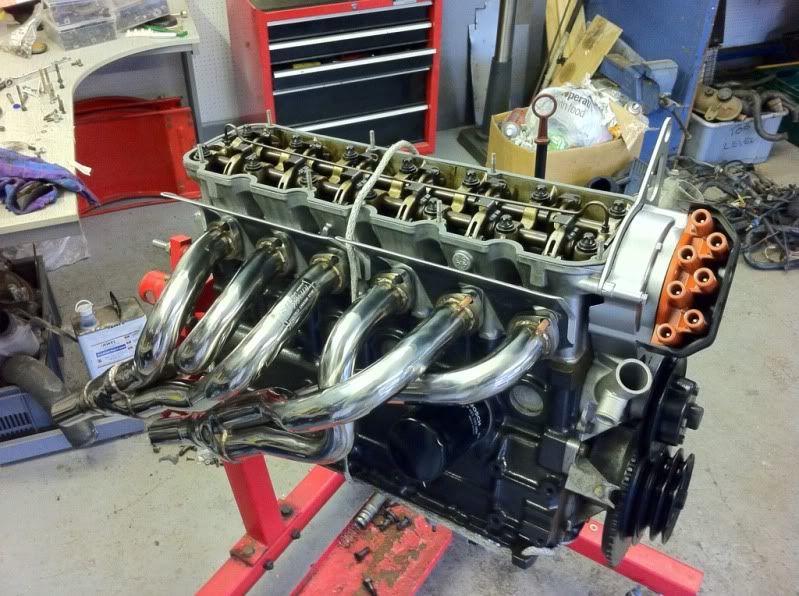
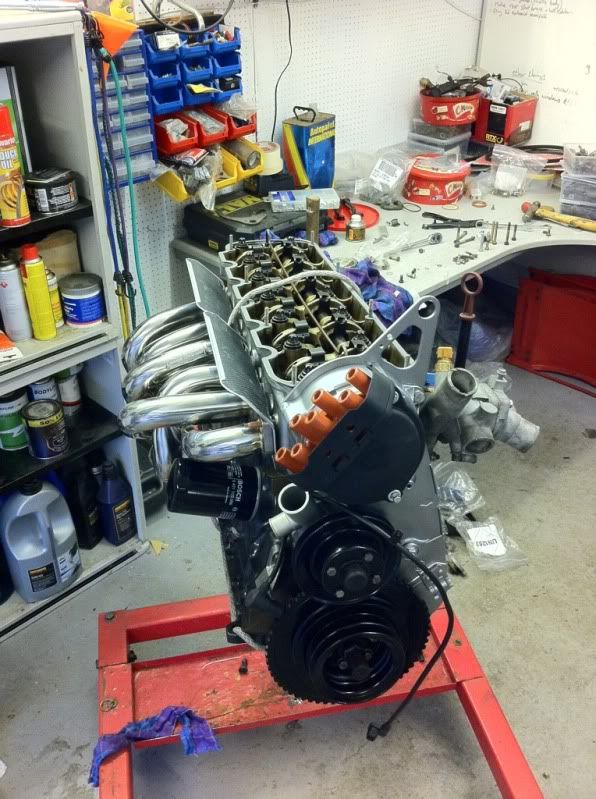





 -
- 
