the m20 developement thread. Some progress and a new lump.

Moderator: martauto

H35-24
E30 Zone Newbie
E30 Zone Newbie
Posts: 181
Joined: Sat Jul 19, 2008 11:00 pm
Location: Denmark

Thu Aug 09, 2012 10:40 pm

Found the German add with the bored out M20B25 TB with M30B35 internals:

http://www.e30.de/ka/showad.php?adid=109578

Image
Why is there not enough time to do it right, but allways enough time to fix the errors - I borrowed that, just so reallistic in my line of work.
User avatar
reggid
E30 Zone Squatter
E30 Zone Squatter
Posts: 1981
Joined: Mon Jul 11, 2005 11:00 pm
Location: Oz

Fri Aug 10, 2012 9:59 am

H35-24 wrote:What Kedge has found that Metric Mechanics do with the M42 intake is always present in all engines. It's wavetuning, and all manifolds intake and exhaust are in someway tuned to give the engine the torquecurve it has.

Basically there are 4 important things to know:

1. A Wave in air travel at the speed of sound, air waves are pressure peaks/drops.

2. When a change in geometry occurs, such as where a runner stops and a plenum starts, an air wave will stop and produce a reflection wave that returns down the runner.

3. A plenum can act as a resonater, that can pump air, it's known as a helmholz resonater.

4. The trick Metric mechanics use is, I can't remember it exactly but it's like when you open the window in a car and sometimes you get this intense pulse generation.
You'll also see it on an E36 M5x airfilterbox, but here the effect is probably to alter some unwanted intake noise.

So if you look at an M20 intake manifold, there are 6 equal length runners that all end in a plenum behind the throttle housing. The length of the runners give the max torque and the plenum acting as a helmholz resonater keeps the torque high in the bottom revs. This is also why the M20B20 and M20b25 have different manifolds, the runners are the same diameter inside, but the plenum is different.

When individual throttlebodies are used on engines like the M20 the increase in power does not come from having 6 TB's instead of one, it comes because the runners get shorter, a shorter runner will move the max torque higher up in the rpm-range and as we all know torque x rpm = bhp.
This usually also means the bottom end torque is decreased as the plenum has now been removed or has a size that makes it seem like its removed to the engine.
The only thing the individual throttle bodies give is a quicker throttle response.

Finally runner diameters are usually a compromise between performance and optiminum fuel/air mixing for best fuel economy.

That's at least what I read when studying my master degree, anyone read something different?

i don't believe the MM manifold has anything to do with reversion regardless of what they say, like you said it is the pressure waves and a differing resonant frequency because of the extra chambers
E30 325is with M20B31
e301988325i
E30 Zone Addict
E30 Zone Addict
Posts: 3701
Joined: Fri Feb 01, 2008 11:00 pm
Location: Taunton, Somerset

Fri Aug 10, 2012 10:01 pm

steve_k wrote:@h35-24 got a link to any info regarding the m20 TB with m30 internals?

I'm sure it could be a big help in this thread.
I was making these BBTB's for a while before I was moved off the machines. It's an expensive option to sacrifice an M30 TB when the butterfly is 2mm ally plate and the M20 shaft can be used with a bit of work from a needle file. Most of the work was the dismantling and reassembly.

The M20 body can be taken from 60mm dia to 64mm dia, something like a 15% increase in CSA.

I still have the two fixtures, one for holding the TB for boring and one for machining the new TB plate, which I would gladly sell as they're sat here doing nothing.

There is a noticeable improvement in throttle response, I believe this is due to removing a bit of restriction between the engine and AFM, I'm confident in saying the BBTB lets the engine rev more freely.
I said:

Can anyone suggest how to test if the boot lights are staying on with the boot shut?

e30topless said:

lock the wife in there
H35-24
E30 Zone Newbie
E30 Zone Newbie
Posts: 181
Joined: Sat Jul 19, 2008 11:00 pm
Location: Denmark

Fri Aug 10, 2012 10:52 pm

e301988325i wrote:
steve_k wrote:@h35-24 got a link to any info regarding the m20 TB with m30 internals?

I'm sure it could be a big help in this thread.
I was making these BBTB's for a while before I was moved off the machines. It's an expensive option to sacrifice an M30 TB when the butterfly is 2mm ally plate and the M20 shaft can be used with a bit of work from a needle file. Most of the work was the dismantling and reassembly.

The M20 body can be taken from 60mm dia to 64mm dia, something like a 15% increase in CSA.

I still have the two fixtures, one for holding the TB for boring and one for machining the new TB plate, which I would gladly sell as they're sat here doing nothing.

There is a noticeable improvement in throttle response, I believe this is due to removing a bit of restriction between the engine and AFM, I'm confident in saying the BBTB lets the engine rev more freely.
In my search for the Total BMW issue mentioning these BBTB's I came across another M20 TB mod. There is a complete 12 step how to do it guide for fitting a M20B25 TB on a M20B20 engine. Reasonably straight forward 1-2 hour job. And by doing a chip tuning in the end, the engine should gain a much a 10+% bhp.
So the TB's are where the horses are tied down it seems.
Why is there not enough time to do it right, but allways enough time to fix the errors - I borrowed that, just so reallistic in my line of work.
e301988325i
E30 Zone Addict
E30 Zone Addict
Posts: 3701
Joined: Fri Feb 01, 2008 11:00 pm
Location: Taunton, Somerset

Fri Aug 10, 2012 10:53 pm

H35-24 wrote:
e301988325i wrote:
steve_k wrote:@h35-24 got a link to any info regarding the m20 TB with m30 internals?

I'm sure it could be a big help in this thread.
I was making these BBTB's for a while before I was moved off the machines. It's an expensive option to sacrifice an M30 TB when the butterfly is 2mm ally plate and the M20 shaft can be used with a bit of work from a needle file. Most of the work was the dismantling and reassembly.

The M20 body can be taken from 60mm dia to 64mm dia, something like a 15% increase in CSA.

I still have the two fixtures, one for holding the TB for boring and one for machining the new TB plate, which I would gladly sell as they're sat here doing nothing.

There is a noticeable improvement in throttle response, I believe this is due to removing a bit of restriction between the engine and AFM, I'm confident in saying the BBTB lets the engine rev more freely.
In my search for the Total BMW issue mentioning these BBTB's I came across another M20 TB mod. There is a complete 12 step how to do it guide for fitting a M20B25 TB on a M20B20 engine. Reasonably straight forward 1-2 hour job. And by doing a chip tuning in the end, the engine should gain a much a 10+% bhp.
So the TB's are where the horses are tied down it seems.
check brianmoores signature, it says something like when fitting a b25 TB to a b20, leave the b25 engine attached to the b25 TB. :D
I said:

Can anyone suggest how to test if the boot lights are staying on with the boot shut?

e30topless said:

lock the wife in there
HairyScreech
Engaged to the E30 Zone
Posts: 6265
Joined: Sun Jan 21, 2007 11:00 pm

Sat Aug 11, 2012 9:31 pm

As said above the pulse chambers will add volume to the runners thus altering the resonance, how the splitting of the pressure wave works out is anyones guess without simulation.
It might plug the hole in the torque curve but its a band aid solution rather than the right one.
That said its still a clever way of band aiding something.

The 320 inlet does have slightly smaller runners as can be seen in the photos above where i have cut a 320 manifold. Short to canibilise the flange.

The throttle does seem to be a restriction as can be seen when going for a bbtb or a 325 body on a 320.
A similar situation exists with the 90s ford engines, a lot of those are restricted on the throttle and a simple throttle swap can yeald ten or so hp.
From simulation the best size for where i am aiming is 70mm, however i haven't taken the time to do it on paper or toddot for other configs of the m20, such is the convenience of technology. :roll:
2.8 development thread http://www.e30zone.net/modules.php?name ... c&t=170822

m3.3.1 m20 thread - now running, chip needed - any volunteers?
http://www.e30zone.net/modules.php?name ... =viewtopic&
HairyScreech
Engaged to the E30 Zone
Posts: 6265
Joined: Sun Jan 21, 2007 11:00 pm

Sat Aug 11, 2012 10:26 pm

Image
Image
Image
Image

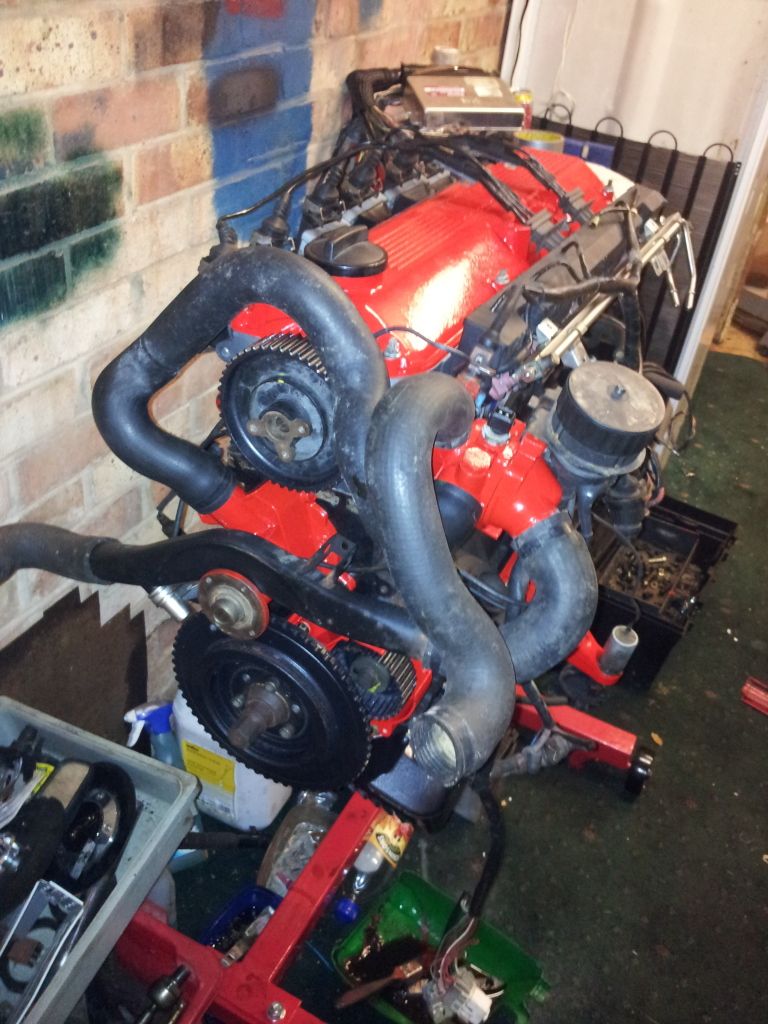
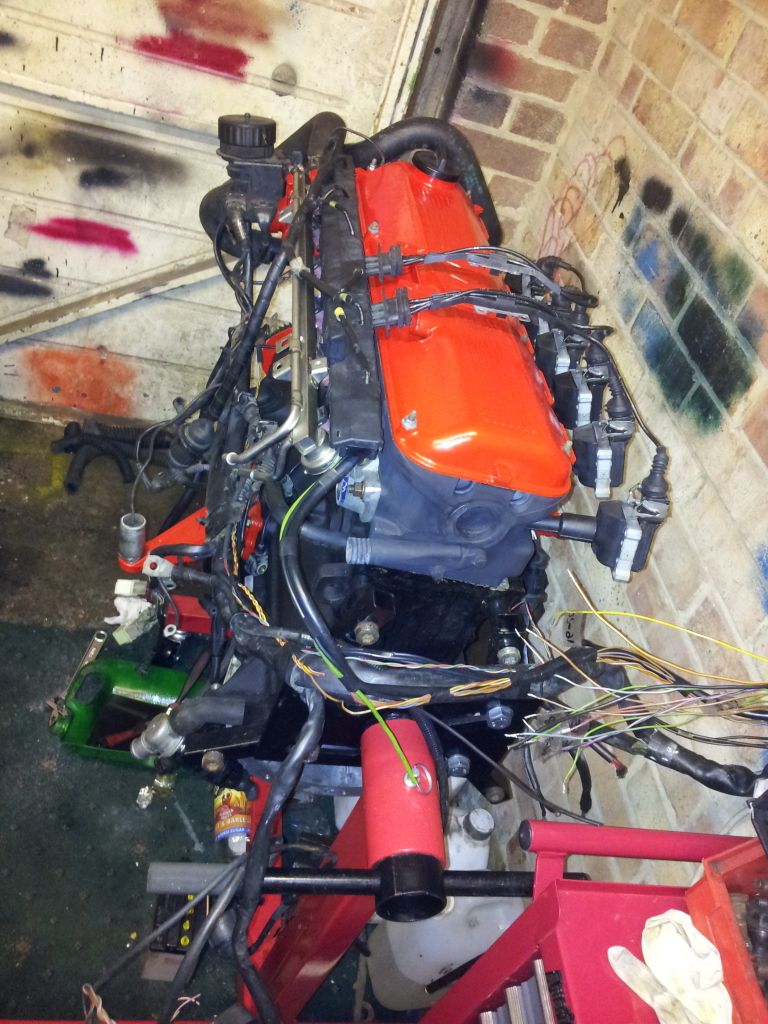
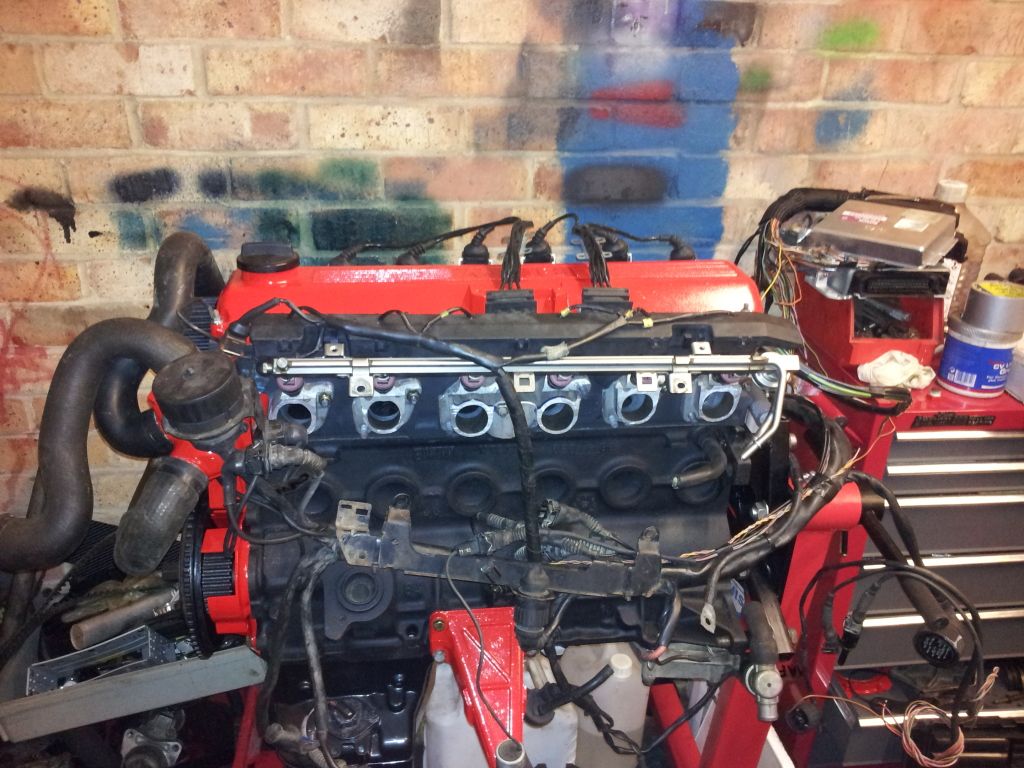
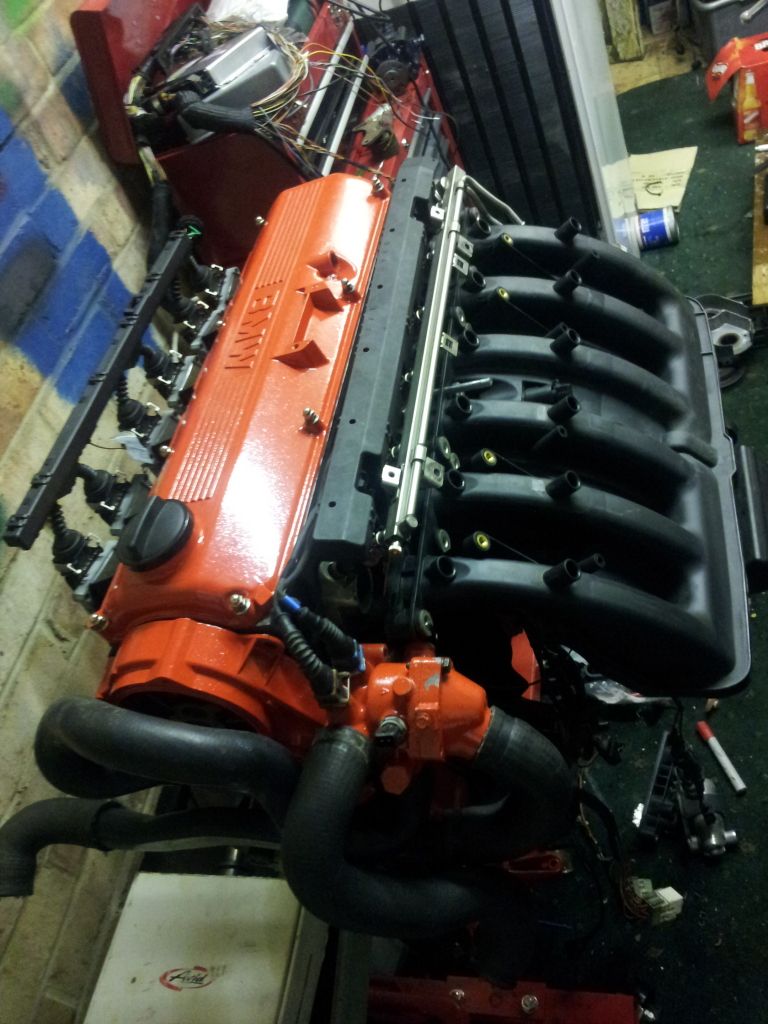
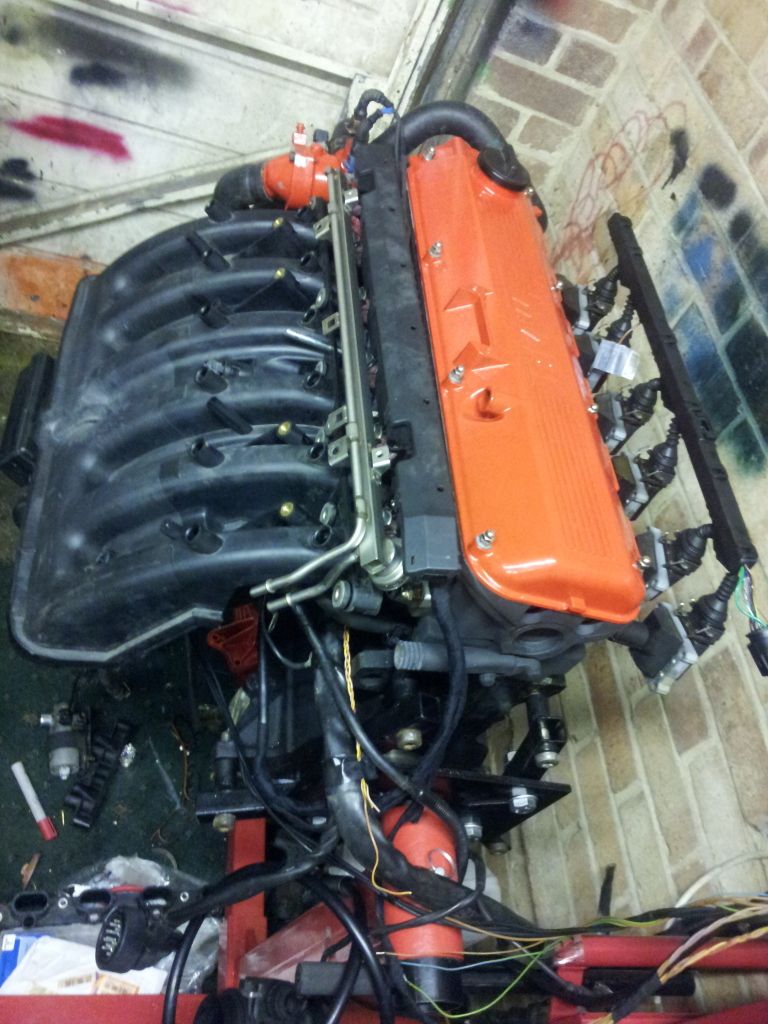
Been cracking on with the firing loom a bit over the last few days, managed to score a whole m50tu loom, coils and red label ecu for next to nothing locally.

Not happy with the way i have done the injectors and coils atm. I want to separate the coil and injection bit and move the injector feeds to the bottom of the cover for neatness sake.
This set up plugs into an e30 loom using and old ecu plug and run about 70% of the functions through the e30 loom with the extra features of the m50tu m3.3.1 added on.
This would allow a normal ecu to be used for fault finding with only a few plugs swaped over.

I still need to run a few feeds but after plugging it all in and checking the continuity to the output i am confident enough in the loom alterations to be able to post the info. (will do in a different thread later tonight.)
2.8 development thread http://www.e30zone.net/modules.php?name ... c&t=170822

m3.3.1 m20 thread - now running, chip needed - any volunteers?
http://www.e30zone.net/modules.php?name ... =viewtopic&
HairyScreech
Engaged to the E30 Zone
Posts: 6265
Joined: Sun Jan 21, 2007 11:00 pm

Mon Sep 03, 2012 8:31 pm

Few new photos but don't have much time to explain till later in the week.
However some eye candy.

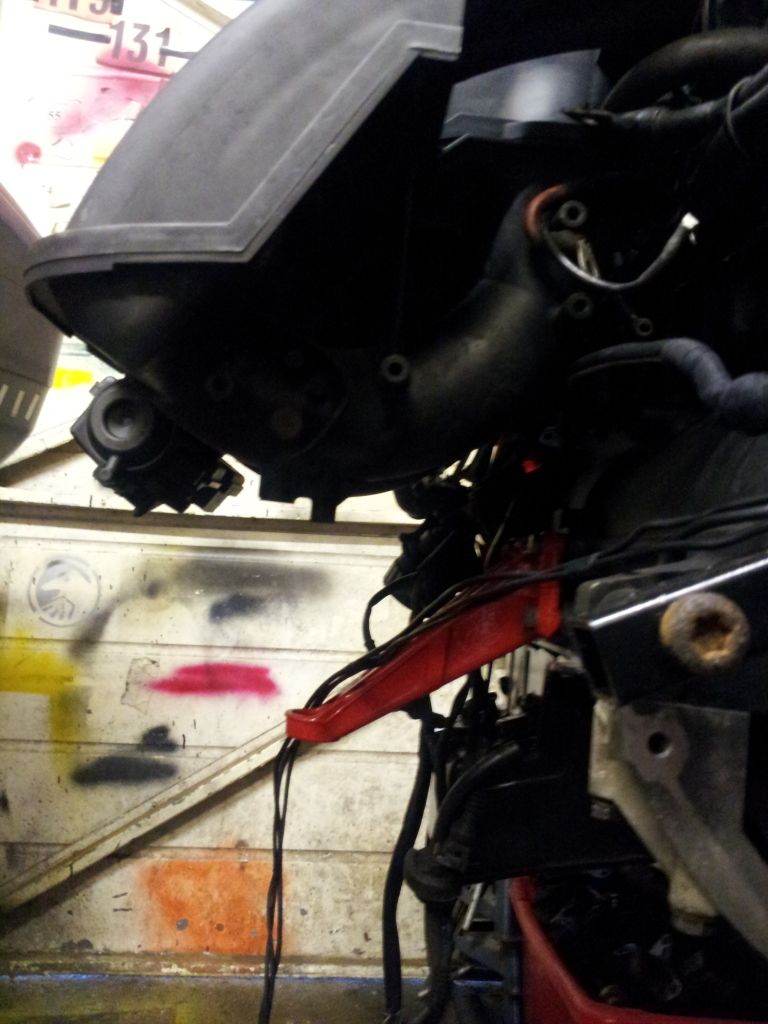
Moved the loom about and started looking at the manifold, re-taped some of the loom its much neater now but i need a new lid for the injectors and a plug for the coils.
Image
Image

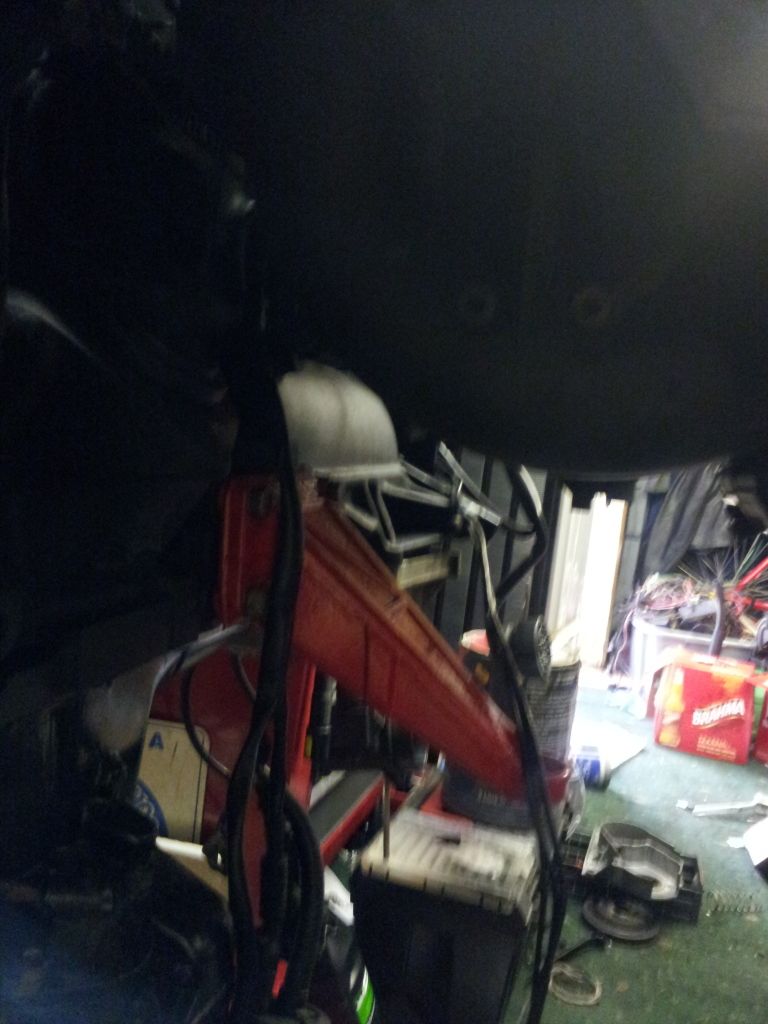
Got lots of issues with the fitment but haven't got time to try solving them yet, still i'm sure anything can be done with enough work.
The spacing is making the intake runners 370mm rather than 320mm, which is a bit of a bummer however its only going to serve to move the torque curve and peak hp down a little although i am still on target according to the sim so meh.

Couple of photos for dan showing some specific areas of concern.
Image
Image
Image
2.8 development thread http://www.e30zone.net/modules.php?name ... c&t=170822

m3.3.1 m20 thread - now running, chip needed - any volunteers?
http://www.e30zone.net/modules.php?name ... =viewtopic&
DanThe
E30 Zone Team Member
Posts: 28641
Joined: Sat Sep 10, 2005 11:00 pm
Location: Staffs
Contact:

Mon Sep 03, 2012 10:27 pm

Looks to me like that manifold/throttle body will be in the bodywork, for the coils you could just do a similar setup to the iS, much much easier than trying to fit a coil directly onto each plug
HairyScreech
Engaged to the E30 Zone
Posts: 6265
Joined: Sun Jan 21, 2007 11:00 pm

Mon Sep 03, 2012 10:49 pm

Coils are not finalized yet, might still even go with the renault ones.

Remember the engine is vertical (can't tilt it as the coils are not attached), i'm up to my nuts in some uni work i need to get finished off for the exam boards so haven't had time to measure much but it should be about the same positioning as an m50/52 manifold, the m20 head with the adapter is about the same width as an m52 head, the 330 manifold is 20mm shorter.
What i'm saying is when tilted it is pretty much vertically inline with the engine mount.

I will get a change to measure soon, if its not possible its not possible.
2.8 development thread http://www.e30zone.net/modules.php?name ... c&t=170822

m3.3.1 m20 thread - now running, chip needed - any volunteers?
http://www.e30zone.net/modules.php?name ... =viewtopic&
User avatar
reggid
E30 Zone Squatter
E30 Zone Squatter
Posts: 1981
Joined: Mon Jul 11, 2005 11:00 pm
Location: Oz

Fri Sep 07, 2012 10:17 am

HairyScreech wrote:Ok, i know i have been promising this for a while but meh, times have been tricky.

I got a chance to test the multi angle inserts i whipped up around christmas time and go over the data.

There are a couple of obvious issues with the data which i will address first.
1. The flow is measured at the wrong valve lift - yep this ones 100% my fault the spread sheet i use takes its lift values from the valve diameter and it was set to 36mm exhaust.
This means the flow was measured in steps 5% of an exhuast valve (1.8mm) rather than steps of 5% inlet diameter (2.1mm)
2. The flow seems to be a bit low - Not sure if this is an effect of the port or the surface finish of the seats as this was done on a different head to the other tests. I had a feeling the results would be effected by using an insert rather than a normal seat which is why i made a stock seat replica.

All these two issues mean is that the data cannot be taken as absolute, the tests only show the trend rather than the actual flow a multi angle seat will produce.
As long as we look at the data as showing a % improvement rather than a peak figure then its all ok.

Obviously i will try to sort these two issues out and get true figures but for now this tells us all we need to know. (and i had already done each test twice before i spotted the error so i though **** it ill deal with it later.)


On to the data.

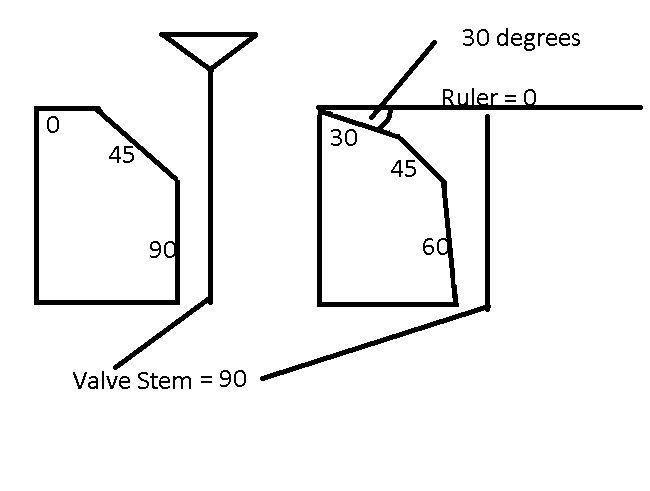
The valve seats have been referred to by there angle profile thus a stock seat is a 0/45/90, having a top face perpendicular to the valve stem, a sealing face at 45 degrees to the valve stem and a throat that is parallel to the valve stem.
The angle is measured as though a ruler had been put across the top of the seat and the flat of the ruler was regarded as 0.
Thus a 30 degree top cut would proceed away from the rulers edge at 30 degrees down into the port.

Its easier to draw so have some dick and quirty diagrams.
Image

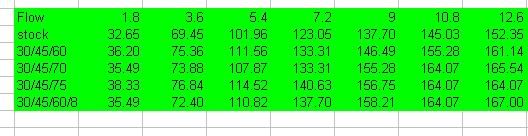
First things first the raw data.
This little chart has the seat profile down the left hand side, The lift value along the top and the Flow in CFM in the rest.
Image

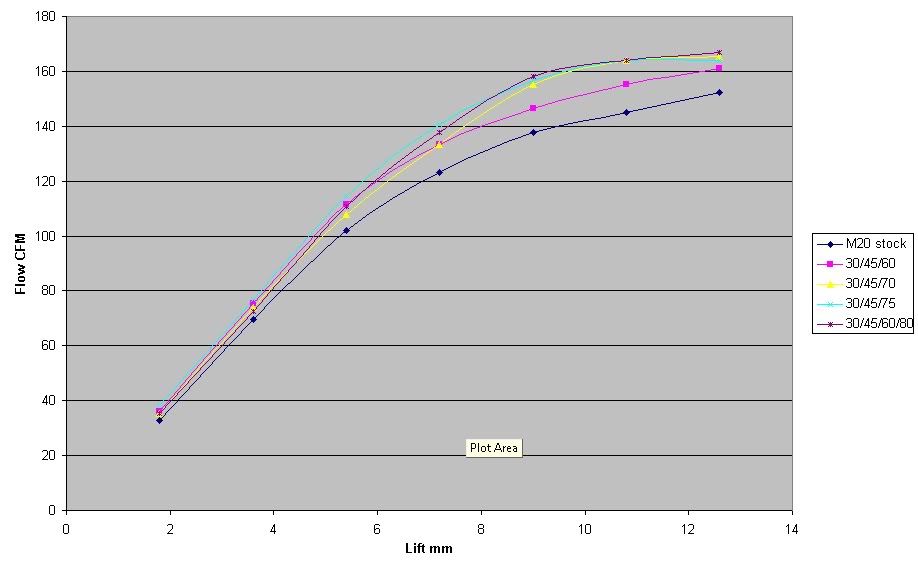
And this chart shows the contents of that table plotted.
Image

Its pretty clear to see here that the best combination on the standard shape m20 port is the 30/45/75. Infact it matches the port and chamber so well it actually works better than a 4 angle.

the average improvement shown by the 30/45/75 over the range is about 13% which all things considered is a massive gain for a very simple alteration.

The plan from here is to test a port on this new head (late 89 rather than mid 85) and see if the lack of flow from the stock seat is due to the insert or the port or a combination of both.
Personally i think its a combination of both and would go a long way to explaining why some e30s are faster than others.

A proper steel 30/45/75 will also be prepared that will tell us the true gain from the multi angle, the inserts are cheap and quick for identifying the best profile but there's nothing like testing the real thing.

The other thing i will do is go to town on one of the ports and retest the inserts, it should help to see if the seats will need to be different once the ports have been worked or if they are more related to the throat and port/chamber angle.
i just checked the bentley manual and it says the stock angles are 15-45-75
E30 325is with M20B31
HairyScreech
Engaged to the E30 Zone
Posts: 6265
Joined: Sun Jan 21, 2007 11:00 pm

Sun Sep 09, 2012 6:04 pm

Interesting, i will have to check the heads i have here, as far as i can tell they are all 90/45.
Funny you should spot that as well, me and byron were talking and it seems not all heads were created equal, there seems to be no rhyme or reason for it but it seems some are a little bit closer to spec than others.
Pretty big thing if you have to run in a class with un ported heads, some have better seats than others and some have a lot less core shift/misalignment in the ports.
I guess it is dependent on the casting batch and who did the seats at the factory rather than year.
2.8 development thread http://www.e30zone.net/modules.php?name ... c&t=170822

m3.3.1 m20 thread - now running, chip needed - any volunteers?
http://www.e30zone.net/modules.php?name ... =viewtopic&
User avatar
reggid
E30 Zone Squatter
E30 Zone Squatter
Posts: 1981
Joined: Mon Jul 11, 2005 11:00 pm
Location: Oz

Tue Sep 11, 2012 3:42 am

HairyScreech wrote:Interesting, i will have to check the heads i have here, as far as i can tell they are all 90/45.
Funny you should spot that as well, me and byron were talking and it seems not all heads were created equal, there seems to be no rhyme or reason for it but it seems some are a little bit closer to spec than others.
Pretty big thing if you have to run in a class with un ported heads, some have better seats than others and some have a lot less core shift/misalignment in the ports.
I guess it is dependent on the casting batch and who did the seats at the factory rather than year.
Alot of heads have been refreshed at some point and therefore the head guy may have put something of his own concoction based on what tools he had.

One thing for sure that a 70-75* to blend to throat flows better than 60. Any chance you can vary the cut that transitions to the chamber to see if 30* is optimum?
E30 325is with M20B31
User avatar
tomislav
E30 Zone Squatter
E30 Zone Squatter
Posts: 1633
Joined: Thu Nov 29, 2007 11:00 pm
Location: Faversham, Kent

Tue Nov 13, 2012 5:09 pm

Hey mister screech, have we any 2.8 development... developments?
'Assumption is the mother of all f**k ups'
HairyScreech
Engaged to the E30 Zone
Posts: 6265
Joined: Sun Jan 21, 2007 11:00 pm

Sun Nov 25, 2012 5:48 pm

The 30* is tiny anyway, the chamber roof is pretty much 30* so the top cut could actually probably be shaved onto the chamber roof and the valve margins moved right out to the edge.
I don't think the 30* top cut really gives a lot.

Yes the 70ish is better than a 60, but a 60 is still better than nothing.
It seems most shops only have a 30/45/60 cutter and are reluctant to get the 30/45/70 or 75 serdi cutter in for 1 job (despite the potential of future work) so a 30/45/60 put on by machine and a further 80 put at the bottom of the seat later by hand with a neuman cutter may actually be the best balance of cost to performance.
One with this method should be up together early next year so we will find out.

I know a 2.7 is being build to my recipe currently and the guy has my latest newest head to copy, however i know he is seriously busy with work atm so i dont know how fast that will come about.

All good crack though. :D

Haven't really managed to get a lot done, i have been pishing about with a 5 stud conversion for later down the line, a e36 m3 compact track car build (for which i am being paid in E21s) and a pair of hot Italian twinks (lancia twin cams).

However that's not to say nothing has happened.
Latest flow graph is as follows:
Image

That is still with a 42mm valve, port area has increased by about 1mm, however this can be reduced with epoxy work down to ~37mm diameter CSA with huge velocity (nearly sucked the dye up out of the pitot probe on the flow bench :mad: )
Have quite big hopes for this one with a larger valve, if it falls flat and dosen't make power then so be it but it will be a shame.

I have also developed a force model for the valves which has allowed me to get accurate rocker loads for any given rpm and point in the valve curve so have been able to run some pretty accurate FEA simulations of the rockers.
I'm currently working on a mathematical model that allows cam profiles to be converted to valve profiles for the complex m20 curved pad(like a roller) and rocker set up which defies normal simple mathematical cam contact models.
Its helliciously complicated so i probably wont post it into this thread but the guy i'm working with on it has said its not in any book and he has never seen it done mathematically before. (in a 50 year top level engineering career and a theoretical physics PHD).
There are for sure better ways but all require CAD and training.
Currently having to earn a crust and getting paid far to little for what i'm doing so progress is extra slow atm but things will happen.
2.8 development thread http://www.e30zone.net/modules.php?name ... c&t=170822

m3.3.1 m20 thread - now running, chip needed - any volunteers?
http://www.e30zone.net/modules.php?name ... =viewtopic&
E30_Crazy
E30 Zone Regular
E30 Zone Regular
Posts: 733
Joined: Fri Mar 05, 2010 11:00 pm
Location: Alaska, USA (Lived in Brandon, Suffolk)

Mon Nov 26, 2012 5:01 am

The green flow chart that you made.. Were the valves themselves standard sized? And the 45* angle is the sealing face, correct? A new set of standard valves (or oversized to same spec) should be alright to use, then, if the sealing face is left at the same angle.

I'm looking at doing a rotrex build, so the more flow, the better. Just need to research and see what, if any, oversized valves will fit with a 288 cam and my stack.

Only thing is, like you said, find somewhere that will cut the 30/45/75.
HairyScreech
Engaged to the E30 Zone
Posts: 6265
Joined: Sun Jan 21, 2007 11:00 pm

Mon Nov 26, 2012 8:00 pm

So far all valves have been 42mm and 45 degree sealing faces.
2.8 development thread http://www.e30zone.net/modules.php?name ... c&t=170822

m3.3.1 m20 thread - now running, chip needed - any volunteers?
http://www.e30zone.net/modules.php?name ... =viewtopic&
e21jps
E30 Zone Newbie
E30 Zone Newbie
Posts: 24
Joined: Sat Jun 09, 2012 11:00 pm
Location: oz

Thu Dec 27, 2012 11:15 am

HairyScreech wrote:
I have also developed a force model for the valves which has allowed me to get accurate rocker loads for any given rpm and point in the valve curve so have been able to run some pretty accurate FEA simulations of the rockers.
I'm currently working on a mathematical model that allows cam profiles to be converted to valve profiles for the complex m20 curved pad(like a roller) and rocker set up which defies normal simple mathematical cam contact models.
Its helliciously complicated so i probably wont post it into this thread but the guy i'm working with on it has said its not in any book and he has never seen it done mathematically before. (in a 50 year top level engineering career and a theoretical physics PHD).
There are for sure better ways but all require CAD and training.


nice thread screech always good to read about peoples m20 adventures and dedication especially when so many back to back results are forthcoming

interested to see/ hear any further information about your valve geometry you might find this roller rocker thread interesting,

I have been using autocad for all the geometry and its very time consuming but the accuracy is worth it

keep up the good work
HairyScreech
Engaged to the E30 Zone
Posts: 6265
Joined: Sun Jan 21, 2007 11:00 pm

Thu Dec 27, 2012 4:32 pm

I have seen your roller thread a few times before, did you solve the wear issue with the first prototype?

From what i remember you came across the same issue i spotted when you first went to the rollers and the drastic change in valve motion vs the pad type.

Cad was the first method suggested for this but we went down the route of mathematical calculation first.

If you are interested i will sort some of the data i have here on the rockers and get it posted up, one thing for sure is valve float is not the cause of broken rockers. (at least not below 8000rpm.)

Quick question, when you did your headers what did you use to determine the step diameters and step locations?
2.8 development thread http://www.e30zone.net/modules.php?name ... c&t=170822

m3.3.1 m20 thread - now running, chip needed - any volunteers?
http://www.e30zone.net/modules.php?name ... =viewtopic&
User avatar
tomislav
E30 Zone Squatter
E30 Zone Squatter
Posts: 1633
Joined: Thu Nov 29, 2007 11:00 pm
Location: Faversham, Kent

Sun Mar 10, 2013 9:55 pm

Hey, we're 3 months in to the new year and no update. Anything progressing on this anymore at all?
'Assumption is the mother of all f**k ups'
HairyScreech
Engaged to the E30 Zone
Posts: 6265
Joined: Sun Jan 21, 2007 11:00 pm

Tue Mar 12, 2013 8:30 pm

Uhh, yes and no.
Been really bloody busy with a combination of work, Lancia Twincams, S50B32 compacts, E21 320/6s and a burst E30 radiator.

The project is no way near dead, Infact I have a heavy chunk of info from my Degree dissertation to post related to the valve train and the cam/valve motion I just haven't had the time to translate it into anything that can be understood easily without a lot of explanation.

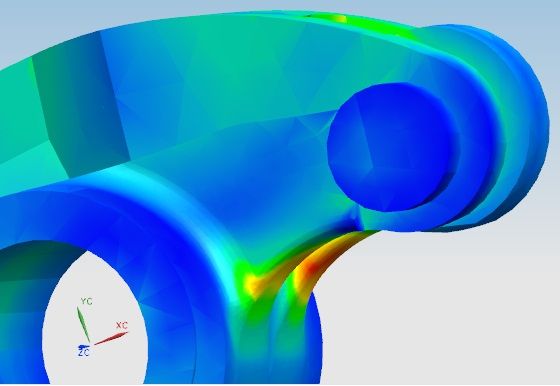
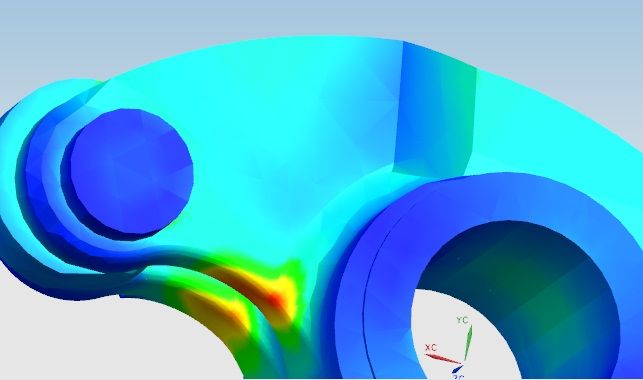
To keep this alive for now here are the FEA results from the rockers, This is the stress at 6000rpm and is clear indication of a fatigue problem rather than any kind of over stress or float issue.

Image
Image
Image

Quite a hell of a stress concentration in the toe of that fork!
2.8 development thread http://www.e30zone.net/modules.php?name ... c&t=170822

m3.3.1 m20 thread - now running, chip needed - any volunteers?
http://www.e30zone.net/modules.php?name ... =viewtopic&
User avatar
Steven320
E30 Zone Newbie
E30 Zone Newbie
Posts: 35
Joined: Sun Feb 10, 2013 11:00 pm

Tue Mar 12, 2013 10:58 pm

but is the stress higher on that point the oem's i mean thats only add 6k but what about you rev it till 7k or 8k will it break?

pretty interesting do and are those from that e21jps guy?
HairyScreech
Engaged to the E30 Zone
Posts: 6265
Joined: Sun Jan 21, 2007 11:00 pm

Tue Mar 12, 2013 11:06 pm

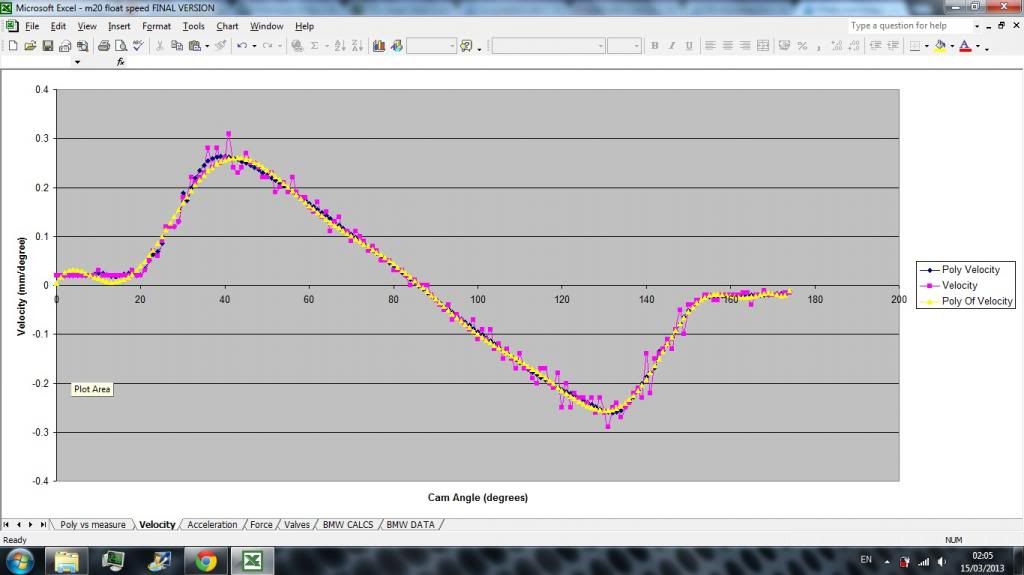
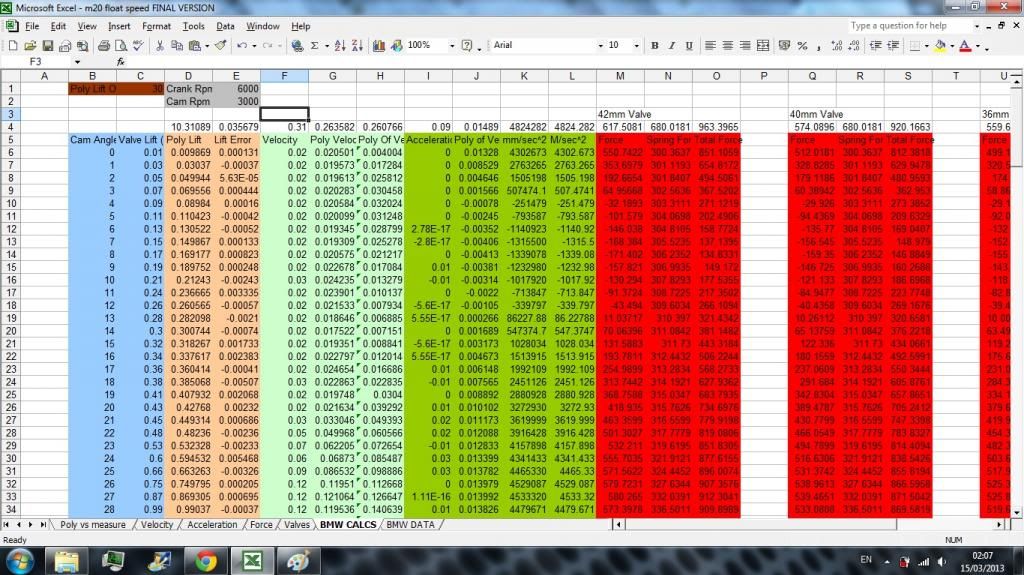
I will post a spread sheet at some point soon that calculates the valve velocity, acceleration and forces from the measured valve motion.
This lets you put in an engine rpm and draws a graph of the forces generated.
It can be used to predict the stress in the rockers and the speed that the valves float at.
It is not finished yet though.


(actually you have it in your inbox, warts and all. It isn't finished though and there are a few omissions. )
2.8 development thread http://www.e30zone.net/modules.php?name ... c&t=170822

m3.3.1 m20 thread - now running, chip needed - any volunteers?
http://www.e30zone.net/modules.php?name ... =viewtopic&
User avatar
Steven320
E30 Zone Newbie
E30 Zone Newbie
Posts: 35
Joined: Sun Feb 10, 2013 11:00 pm

Tue Mar 12, 2013 11:20 pm

i read that you are pretty handy with all that software. do you work for some company? :eek:
i will try to follow it.

(i see thanks again) 8)
User avatar
tomislav
E30 Zone Squatter
E30 Zone Squatter
Posts: 1633
Joined: Thu Nov 29, 2007 11:00 pm
Location: Faversham, Kent

Wed Mar 13, 2013 1:55 pm

So the rockers are potentially a weak spot then?
'Assumption is the mother of all f**k ups'
User avatar
Steven320
E30 Zone Newbie
E30 Zone Newbie
Posts: 35
Joined: Sun Feb 10, 2013 11:00 pm

Wed Mar 13, 2013 3:46 pm

jup only the latest febi rockers can handle 7k constant and a peak little over 7k. thats mainly causd by the build of the rockers, the rocker shaft is not in the middle, its more on the cam side then on the valve side so there is more force on the cam lobe and rockers.
and thats why there designing new rocker. to ative 8 or 9k with less friction and wear and also can run hotter cams than before.

(correct me if im wrong)
HairyScreech
Engaged to the E30 Zone
Posts: 6265
Joined: Sun Jan 21, 2007 11:00 pm

Wed Mar 13, 2013 6:58 pm

It's more an unfortunate consequence of the arch in the bottom of the fork of the rocker that allows it to clear the retainer.
It's kind of a design flaw but it's not really as they are fine in a standard engine and bmw had different goals.
2.8 development thread http://www.e30zone.net/modules.php?name ... c&t=170822

m3.3.1 m20 thread - now running, chip needed - any volunteers?
http://www.e30zone.net/modules.php?name ... =viewtopic&
User avatar
reggid
E30 Zone Squatter
E30 Zone Squatter
Posts: 1981
Joined: Mon Jul 11, 2005 11:00 pm
Location: Oz

Wed Mar 13, 2013 8:20 pm

what proportion of load is caused by valve spring (static valve spring stiffness*lift) vs inertia (equivalent mass of valvetrain x acceleration) at 7k?

what valve acceleration would a schrick 304 impart vs stock cam?

what does the S-N curve look like for this cast alloy?
Last edited by reggid on Wed Mar 13, 2013 8:28 pm, edited 1 time in total.
E30 325is with M20B31
HairyScreech
Engaged to the E30 Zone
Posts: 6265
Joined: Sun Jan 21, 2007 11:00 pm

Wed Mar 13, 2013 8:28 pm

Between me an malcolm we are not sure what the alloy is so a true S-N curve for the material is unknown.

Spring force to inertia force is about 1:1.23@7k. However i know of an inaccuracy in the valve motion model that will make this slightly inaccurate.
2.8 development thread http://www.e30zone.net/modules.php?name ... c&t=170822

m3.3.1 m20 thread - now running, chip needed - any volunteers?
http://www.e30zone.net/modules.php?name ... =viewtopic&
User avatar
reggid
E30 Zone Squatter
E30 Zone Squatter
Posts: 1981
Joined: Mon Jul 11, 2005 11:00 pm
Location: Oz

Wed Mar 13, 2013 8:31 pm

HairyScreech wrote:Between me an malcolm we are not sure what the alloy is so a true S-N curve for the material is unknown.

Spring force to inertia force is about 1:1.23@7k. However i know of an inaccuracy in the valve motion model that will make this slightly inaccurate.
so what made you conclude that there is a fatigue issue? (other than the obvious it is cast aluminium lol)

what sort of load magnitude are we talking?

According to MM the rockers break at quasi static load of 300-425lb depending on the brand. (maybe work out the material ”˜strength’ back calculating)?

If spring force is say 150lb (realistic) on a moderate high performance valve spring and cam at peak lift.

peak inertia effects do not coincide with maximum lift so the 1:1.2 ratio is this at a certain crank angle position?

To work out the failure mechanism you need some failed rockers and look at the fracture face to see if there is evidence of fatigue or simply that maladjusted valves and insufficient spring stiffness causes dynamic effects to escalate and cause fracture due to overload.
E30 325is with M20B31
HairyScreech
Engaged to the E30 Zone
Posts: 6265
Joined: Sun Jan 21, 2007 11:00 pm

Thu Mar 14, 2013 7:41 pm

reggid wrote:
HairyScreech wrote:Between me an malcolm we are not sure what the alloy is so a true S-N curve for the material is unknown.

Spring force to inertia force is about 1:1.23@7k. However i know of an inaccuracy in the valve motion model that will make this slightly inaccurate.
so what made you conclude that there is a fatigue issue? (other than the obvious it is cast aluminium lol)

what sort of load magnitude are we talking?

According to MM the rockers break at quasi static load of 300-425lb depending on the brand. (maybe work out the material ”˜strength’ back calculating)?

If spring force is say 150lb (realistic) on a moderate high performance valve spring and cam at peak lift.

peak inertia effects do not coincide with maximum lift so the 1:1.2 ratio is this at a certain crank angle position?

To work out the failure mechanism you need some failed rockers and look at the fracture face to see if there is evidence of fatigue or simply that maladjusted valves and insufficient spring stiffness causes dynamic effects to escalate and cause fracture due to overload.
Yes there is the obvious of being alu.
We pretty much looked at the S-N curve of several cast alus that are used for other similar things and they were all looking a bit uncomfortable with the high rev stress.

The 1:1.23 ratio was just the max of the two spread sheet columns, thus max spring force vs max inertia. at the actual peak force they will indeed be different. I didn't think of that last night.
I will take a proper look at the numbers i used (spread sheet tots up and tells me the combined max without having to look at the individual numbers).

I did have some nice pics of broken rockers and a broken one kicking about, I will go looking for them.
2.8 development thread http://www.e30zone.net/modules.php?name ... c&t=170822

m3.3.1 m20 thread - now running, chip needed - any volunteers?
http://www.e30zone.net/modules.php?name ... =viewtopic&
User avatar
reggid
E30 Zone Squatter
E30 Zone Squatter
Posts: 1981
Joined: Mon Jul 11, 2005 11:00 pm
Location: Oz

Thu Mar 14, 2013 8:38 pm

HairyScreech wrote:
reggid wrote:
HairyScreech wrote:Between me an malcolm we are not sure what the alloy is so a true S-N curve for the material is unknown.

Spring force to inertia force is about 1:1.23@7k. However i know of an inaccuracy in the valve motion model that will make this slightly inaccurate.
so what made you conclude that there is a fatigue issue? (other than the obvious it is cast aluminium lol)

what sort of load magnitude are we talking?

According to MM the rockers break at quasi static load of 300-425lb depending on the brand. (maybe work out the material ”˜strength’ back calculating)?

If spring force is say 150lb (realistic) on a moderate high performance valve spring and cam at peak lift.

peak inertia effects do not coincide with maximum lift so the 1:1.2 ratio is this at a certain crank angle position?

To work out the failure mechanism you need some failed rockers and look at the fracture face to see if there is evidence of fatigue or simply that maladjusted valves and insufficient spring stiffness causes dynamic effects to escalate and cause fracture due to overload.
Yes there is the obvious of being alu.
We pretty much looked at the S-N curve of several cast alus that are used for other similar things and they were all looking a bit uncomfortable with the high rev stress.

The 1:1.23 ratio was just the max of the two spread sheet columns, thus max spring force vs max inertia. at the actual peak force they will indeed be different. I didn't think of that last night.
I will take a proper look at the numbers i used (spread sheet tots up and tells me the combined max without having to look at the individual numbers).

I did have some nice pics of broken rockers and a broken one kicking about, I will go looking for them.
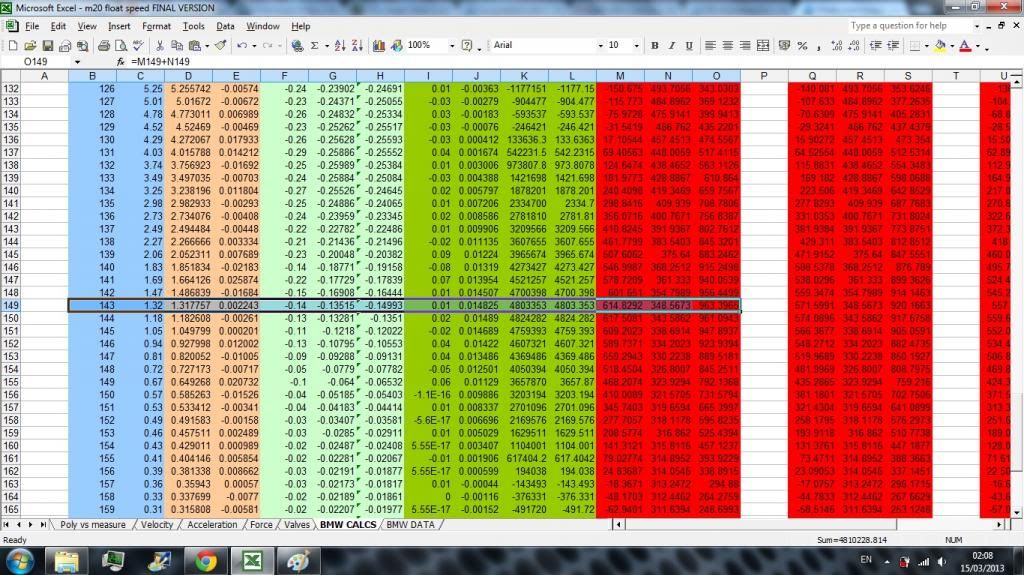
if we assume that peak spring force and peak inertia force coincide then some of the cheaper rockers should come close to breaking after 1 cycle but they actually do last pretty well considering.......the rockers I had that broke on a junk head I found broke by overload fracture due to belt failure. All the valves that bend failed a rocker. If the rockers do develop a crack I would suspect the crack size to cause fast fracture is quite small due to the poor fracture toughness and ductility of cast alloy and Al in general.
Is the acceleration linear with rpm or is there a square or cube involved?
From a couple of displacement/velocity/acceleration curves ive seen the acceleration over the nose where spring force is highest is about 1/3 of the peak acceleration. This obviously depends on the profile. I have a plotted curve of some big motha catcams in excel ill see if I cant come up with a decent curve fit for certain parts and differentiate them a couple times to see what acceleration levels we are talking about.
We are starting to see why lightweight valvetrain have their merit at more than just stopping float and wear. A nice beehive spring and retainer saves alot of mass over stock. You can also goto titanium retainers and valves for the next level which would drastically reduce mass, loads and wear.
Do you have one of thosea beefy rockers that you could measure and compare?
You need an assumed load spectrum to do a cumulative fatigue damage assessment. You would not need a life of 1e8 cycles at 6 or 7000rpm it would take a lot of racing to be at those revs. For 3500rpm valvetrain speed (half 7k crank speed) that is about 50hrs at those revs to get to that cycle count.
Assuming cruising about 60mph for 200,000miles in top gear before a head rebuilt you need to last 300,000,000 cycles which is a lot and well past a typical endurance limit that many say Al doesn’t have. At this speed the valvetrain would be rotating at 1500rpm for typical aggressively geared E30.
E30 325is with M20B31
HairyScreech
Engaged to the E30 Zone
Posts: 6265
Joined: Sun Jan 21, 2007 11:00 pm

Fri Mar 15, 2013 2:02 am

Oh yes, we are WELL in to high cycle fatigue.
We are talking about fatigue where it is all nearly unknown and materials start defying there trends.

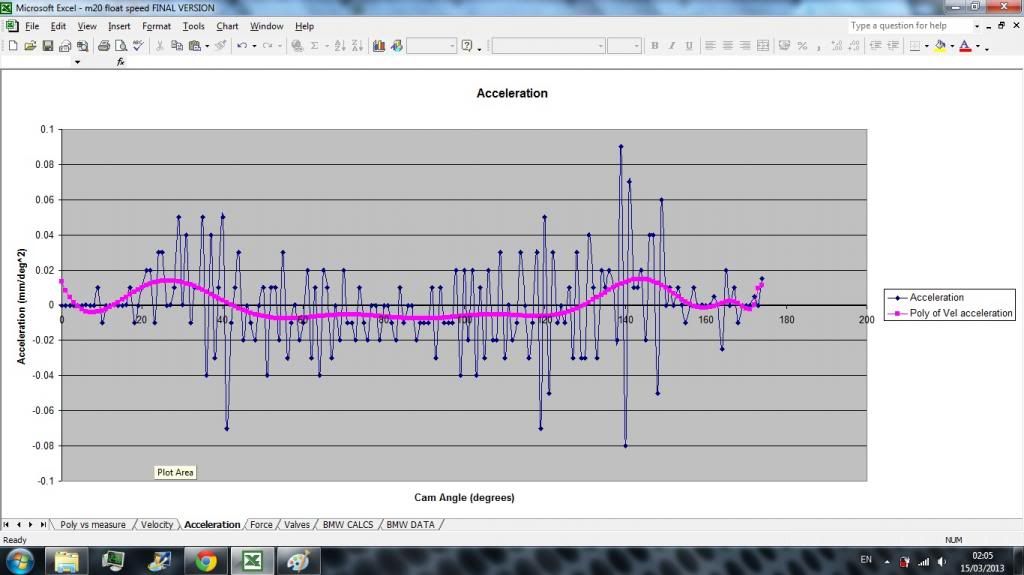
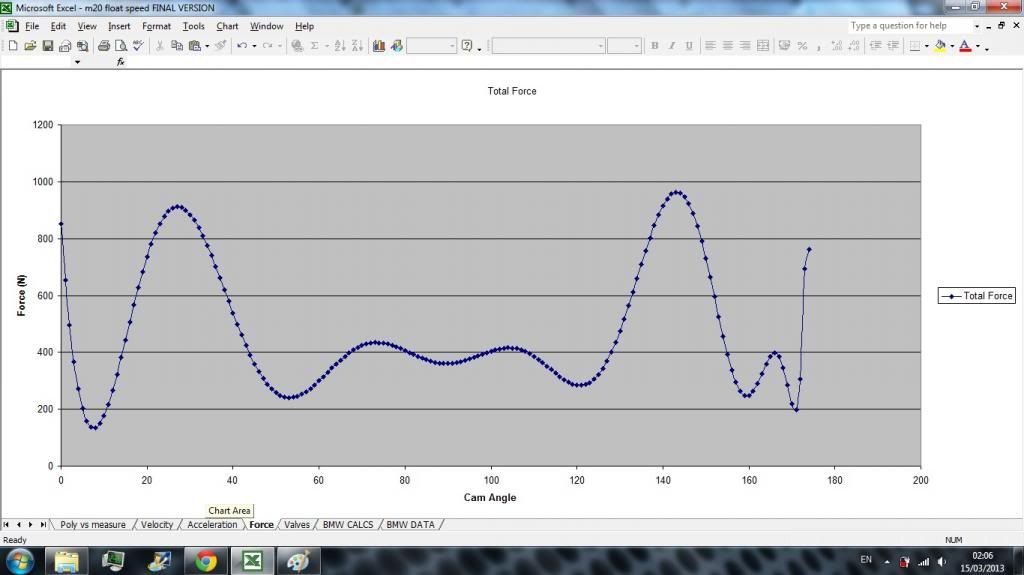
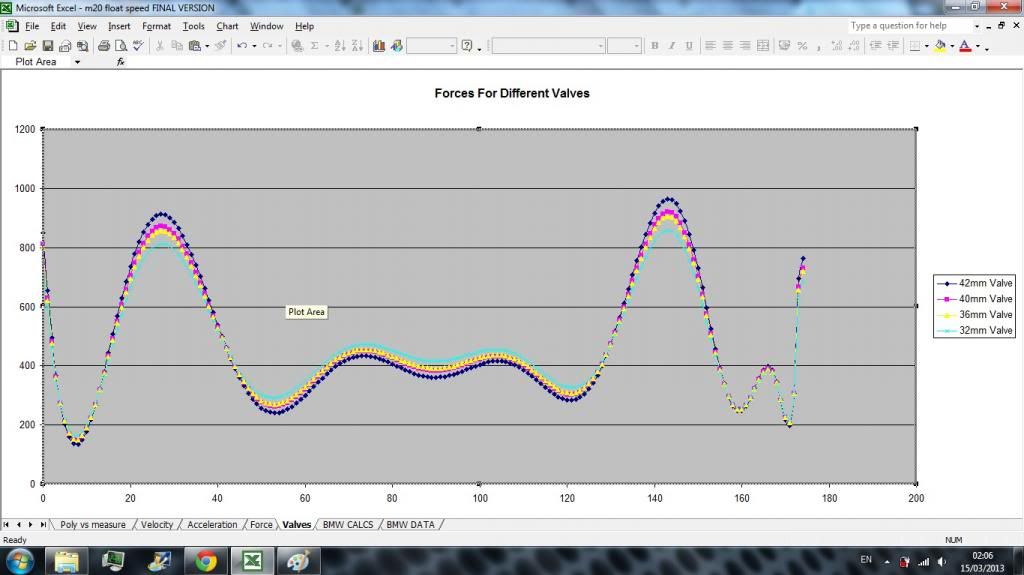
The velocity etc profiles for the m20 map out kind of odd. They look wrong but the graphs actually do show the truth, the m20 curved rocker creates a strange valve motion.

Here are a couple of graphs from what I have:

Image
Image
Image
Image
Image
Image

The last one shows how valve mass effects things.
2.8 development thread http://www.e30zone.net/modules.php?name ... c&t=170822

m3.3.1 m20 thread - now running, chip needed - any volunteers?
http://www.e30zone.net/modules.php?name ... =viewtopic&
morerevsm3
E30 Zone Newbie
E30 Zone Newbie
Posts: 43
Joined: Sun Jul 06, 2008 11:00 pm

Tue Mar 19, 2013 11:31 pm

2.8L NA M20 can make good power....I'll just leave this here-

Speedtouch
Old Skooler
Old Skooler
Posts: 14070
Joined: Tue Feb 14, 2006 11:00 pm
Location: Canterbury

Tue Mar 19, 2013 11:43 pm

259.1kW equates to 347.5bhp! Remarkable, from a carb'd M20. 8O
///M aurice
ECU Upgrade EPROM Chips, £40 posted within the UK. Note these are not Zone chips.
viewtopic.php?f=6&t=279421
Post Reply