PORTER CABLE RANDOM ORBITAL AND HOW TO USE IT
Posted: Sat Jan 07, 2006 11:40 pm
hi all
Thought i might try and give some information on the Porter Cable that i have used for about 5 years.
Without doubt the best bit of kit i have ever bought and results that it can achieve with correct attatcments and products are outstanding.
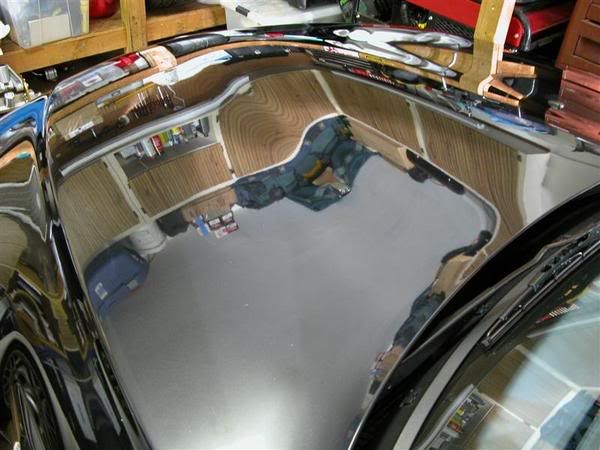
The key to an amazing paint finish without doubt ,no matter what you read on the bottle,lies in the prep of your paint surface.
The more time spent doing this is paid back 10 fold once you apply your chosen topcoat product.
I have been detailing cars for nearly 20 years now as a passion in my spare time.I can assure you i have learnt by my mistakes and been sucked in by manufacturers claims of their wonder product!!!
There is no such wonder product.It is not possible to prep a car to the highest standard using one product in ten minutes.
The public as a whole want everything quickly and thus many marketing claims are how their product is fast and easy to use.
Truth is you only get out of anything what you put in.So if you are prepared to take your time,follow a few guidelines i will try to show you how to obtain a really great finish.
If I had to name a single product that has caused the most excitement for me, it would have to be the Porter Cable 7424 Random-Orbit 6Ԛâ€a Polisher. Its name alone is a huge source of confusion, as it goes by several different titles, including Ԛ“PCԚâ€a (Porter Cable), Ԛ“DA polisherԚâ€a (dual-action polisher), Ԛ“ROBԚâ€a (random orbit buffer), or any of its model variants, including 7334, 7335 or 7336.
The term random orbit defines the action of the toolÔš's head. Unlike a rotary buffer, that spins at variable speed on a stationary spindle, a random orbit machine operates by spinning the head (free-spinning) on a center spindle and running this spindle around an eccentric offset.
The fact that the backing plate spindle is free-spinning is what allows Porter Cable to call their 7424 a random orbit machine. In practical terms, thereÔš's nothing random about the polishing action. At about one pound of constant, even pad pressure, the backing plate spindle of the 7424 stops spinning.
The PC 7424 most closely mimics circular hand polishing. Imagine being able to make 2,500 to 6,000 tight hand circles in a single minute and youÔš'll have a pretty good idea of how the PC 7424 does its job. It works just like your hand, only at super-human speed! To put the beauty of this machine into complete perspective, it works 100 times faster than a buff athlete, but it never gets tired!
As long as IÔš'm comparing the PC 7424 to an athlete, I should mention that itÔš's also adept at more than one game. Given the appropriate athletic gear, the 7424 is a tri-athlete, excelling at polishing, waxing and buffing. With the proper brush attachments, it has also been known to tackle carpets and upholstery.
To operate the machine, follow these simple instructions:
Your car must be freshly washed and dry. Do not buff on a dirty finish.
Work in an area with good lighting. Overhead fluorescent or halogen lighting is best.
Remove all rings, watches, bracelets, belts and other items that will scratch your paint.
Adjust the machine speed to 3 or 4 on the thumbwheel. This is a good starting point.
More pressure applied with greater speed means more abrasive.
With the machine switched off, apply a small amount of polish, cleaner or wax directly to the polishing pad. There are two good methods that seem to work. Squeeze out a complete ring of product about 1 inch in from the outside of the pad, or squeeze out an Ԛ“XԚâ€a of product across the pad.
Dab the pad in 3-4 spots around the area to be polished, cleaned or waxed to distribute the product.
Position the polisher flat on the work surface, get a firm grip and switch it on with your thumb.
Move the polisher back and forth (east/west) in a slow, sweeping motion, overlapping each pass (by 50% of the pad width) with the previous, and then switch your pattern to up and down (north/south). Keep the Porter moving thatway you get into a rythmn and your prep is more even over panel.Work the product until you see it haze.This should take about 4 mins.If it is taking longer then you have used too much product and too much doesnt make it better.When its hazed and kinda begun to disappear from panel then buff off with good quality microfibre .
It is not necessary to apply more than a pound of pad pressure. Allow the polisher to work under its own weight.
Use a clean pad with each product. Do not mix products on a pad. If a pad is not dirty, you may store it in a Ziploc baggie for future use. Be sure to label the baggie or the pad.
If a pad becomes caked with product it is possible to wash product out under a tap and then leave to dry or spin dry for 60 secs on the Porter!!
ItÔš's possible to use a range of backing plates and pads with the Porter Cable 7424. Velcro backing plates are available in sizes ranging from 3 to 7 inches.
For proper and safe operation, the backing plate and pad combination must be balanced to the installed counterweight. The purpose of the counterweight is to dampen harmonic distortions (vibration) caused by the pad whipping around in its tight orbit. If the counterweight was not in place, you would not be able to hang on to the machine for more than a few minutes before your hand went numb.
For our purposes you need to buy a pad kit.
this will consist of a flexible backing plate which is 6"
this will screw into Porter in place of one supplied and is velcro backed so we can interchange pads real quick.
Pad kit will consist of 3 pads
these differ in abrasiveness
first will be a pad that will safely remove oxidised paint and swirl marks
second will be a pad that will move very fine marks and at same time enhance gloss
third will be a pad that is NON abrasive and this is used to apply polish/wax
a bonnet is also supplied with the kit i use that can be used to buff of with
I prefer to remove by hand.No real reason i just do.personal thing
IT IS IMPORTANT TO NOTE THAT YOU SHOULD ALWAYS START WITH LEAST ABRASIVE PADS AND PRODUCTS FIRST
its easy to go more abrasive if defects are not being removed.
So this is kind of the dynamics of how it works.
You develop your own way and its all down to experimentation.
You find what works for you and develop it.
In another post i will list what products i use and when and what works for me and which pads i use when etc if that helps people
Remember the porter is only available in usa and its 110v
you will need a transformer to use here.
one company sells them here but he sells them for 210 quid plus post
can be got for a lot cheaper.
iam happy to answer questions but please only questions regarding paint prep and porter in this thread.
when i have done the other threads covering other topics ill answer questions about them there.
so please keep it on topic and i hope it helps in some way.
john
Thought i might try and give some information on the Porter Cable that i have used for about 5 years.
Without doubt the best bit of kit i have ever bought and results that it can achieve with correct attatcments and products are outstanding.
The key to an amazing paint finish without doubt ,no matter what you read on the bottle,lies in the prep of your paint surface.
The more time spent doing this is paid back 10 fold once you apply your chosen topcoat product.
I have been detailing cars for nearly 20 years now as a passion in my spare time.I can assure you i have learnt by my mistakes and been sucked in by manufacturers claims of their wonder product!!!
There is no such wonder product.It is not possible to prep a car to the highest standard using one product in ten minutes.
The public as a whole want everything quickly and thus many marketing claims are how their product is fast and easy to use.
Truth is you only get out of anything what you put in.So if you are prepared to take your time,follow a few guidelines i will try to show you how to obtain a really great finish.
If I had to name a single product that has caused the most excitement for me, it would have to be the Porter Cable 7424 Random-Orbit 6Ԛâ€a Polisher. Its name alone is a huge source of confusion, as it goes by several different titles, including Ԛ“PCԚâ€a (Porter Cable), Ԛ“DA polisherԚâ€a (dual-action polisher), Ԛ“ROBԚâ€a (random orbit buffer), or any of its model variants, including 7334, 7335 or 7336.
The term random orbit defines the action of the toolÔš's head. Unlike a rotary buffer, that spins at variable speed on a stationary spindle, a random orbit machine operates by spinning the head (free-spinning) on a center spindle and running this spindle around an eccentric offset.
The fact that the backing plate spindle is free-spinning is what allows Porter Cable to call their 7424 a random orbit machine. In practical terms, thereÔš's nothing random about the polishing action. At about one pound of constant, even pad pressure, the backing plate spindle of the 7424 stops spinning.
The PC 7424 most closely mimics circular hand polishing. Imagine being able to make 2,500 to 6,000 tight hand circles in a single minute and youÔš'll have a pretty good idea of how the PC 7424 does its job. It works just like your hand, only at super-human speed! To put the beauty of this machine into complete perspective, it works 100 times faster than a buff athlete, but it never gets tired!
As long as IÔš'm comparing the PC 7424 to an athlete, I should mention that itÔš's also adept at more than one game. Given the appropriate athletic gear, the 7424 is a tri-athlete, excelling at polishing, waxing and buffing. With the proper brush attachments, it has also been known to tackle carpets and upholstery.
To operate the machine, follow these simple instructions:
Your car must be freshly washed and dry. Do not buff on a dirty finish.
Work in an area with good lighting. Overhead fluorescent or halogen lighting is best.
Remove all rings, watches, bracelets, belts and other items that will scratch your paint.
Adjust the machine speed to 3 or 4 on the thumbwheel. This is a good starting point.
More pressure applied with greater speed means more abrasive.
With the machine switched off, apply a small amount of polish, cleaner or wax directly to the polishing pad. There are two good methods that seem to work. Squeeze out a complete ring of product about 1 inch in from the outside of the pad, or squeeze out an Ԛ“XԚâ€a of product across the pad.
Dab the pad in 3-4 spots around the area to be polished, cleaned or waxed to distribute the product.
Position the polisher flat on the work surface, get a firm grip and switch it on with your thumb.
Move the polisher back and forth (east/west) in a slow, sweeping motion, overlapping each pass (by 50% of the pad width) with the previous, and then switch your pattern to up and down (north/south). Keep the Porter moving thatway you get into a rythmn and your prep is more even over panel.Work the product until you see it haze.This should take about 4 mins.If it is taking longer then you have used too much product and too much doesnt make it better.When its hazed and kinda begun to disappear from panel then buff off with good quality microfibre .
It is not necessary to apply more than a pound of pad pressure. Allow the polisher to work under its own weight.
Use a clean pad with each product. Do not mix products on a pad. If a pad is not dirty, you may store it in a Ziploc baggie for future use. Be sure to label the baggie or the pad.
If a pad becomes caked with product it is possible to wash product out under a tap and then leave to dry or spin dry for 60 secs on the Porter!!
ItÔš's possible to use a range of backing plates and pads with the Porter Cable 7424. Velcro backing plates are available in sizes ranging from 3 to 7 inches.
For proper and safe operation, the backing plate and pad combination must be balanced to the installed counterweight. The purpose of the counterweight is to dampen harmonic distortions (vibration) caused by the pad whipping around in its tight orbit. If the counterweight was not in place, you would not be able to hang on to the machine for more than a few minutes before your hand went numb.
For our purposes you need to buy a pad kit.
this will consist of a flexible backing plate which is 6"
this will screw into Porter in place of one supplied and is velcro backed so we can interchange pads real quick.
Pad kit will consist of 3 pads
these differ in abrasiveness
first will be a pad that will safely remove oxidised paint and swirl marks
second will be a pad that will move very fine marks and at same time enhance gloss
third will be a pad that is NON abrasive and this is used to apply polish/wax
a bonnet is also supplied with the kit i use that can be used to buff of with
I prefer to remove by hand.No real reason i just do.personal thing
IT IS IMPORTANT TO NOTE THAT YOU SHOULD ALWAYS START WITH LEAST ABRASIVE PADS AND PRODUCTS FIRST
its easy to go more abrasive if defects are not being removed.
So this is kind of the dynamics of how it works.
You develop your own way and its all down to experimentation.
You find what works for you and develop it.
In another post i will list what products i use and when and what works for me and which pads i use when etc if that helps people
Remember the porter is only available in usa and its 110v
you will need a transformer to use here.
one company sells them here but he sells them for 210 quid plus post
can be got for a lot cheaper.
iam happy to answer questions but please only questions regarding paint prep and porter in this thread.
when i have done the other threads covering other topics ill answer questions about them there.
so please keep it on topic and i hope it helps in some way.
john