Page 1 of 1

BMW M20 flow testing-results!

Posted: Sun Dec 16, 2007 10:36 am
by MarquisRex
Hi guys, new on these boards, but not new to BMW circles. I finally got the M20 flow testing completed I thought I would Share.
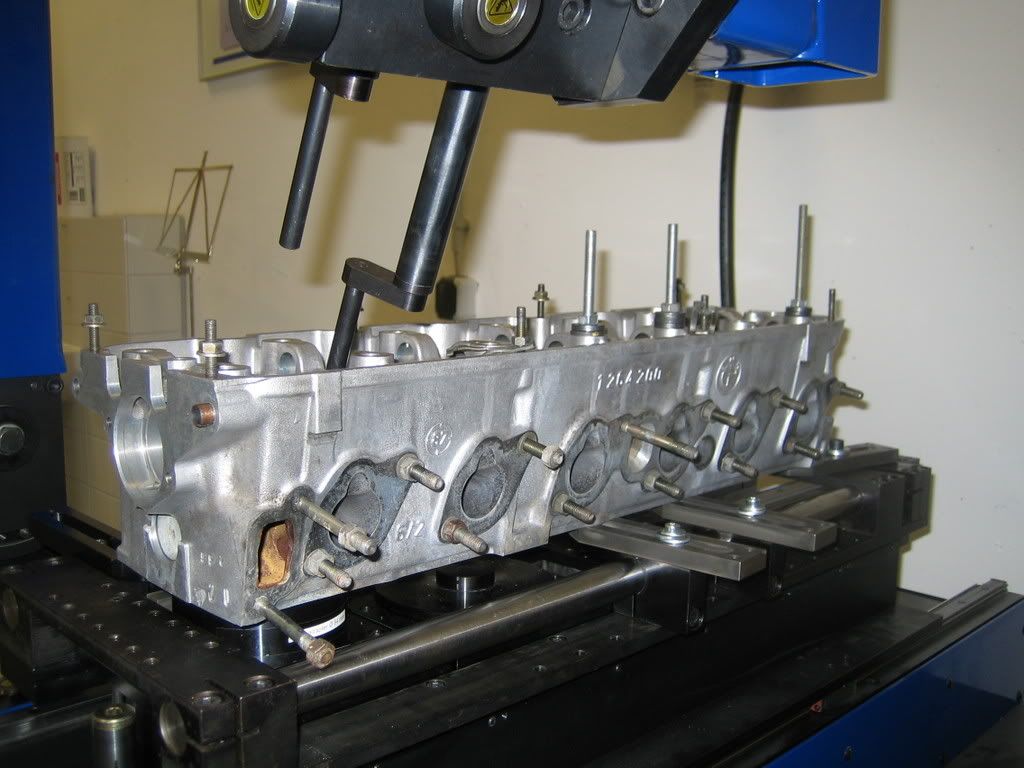
Having been involved in a number of 4 valve pent roof high performance developments that are currently in production it was a nice change undertaking the evaluation of some old style 2 valve cylinder heads and comparing them to some benchmark values I have.
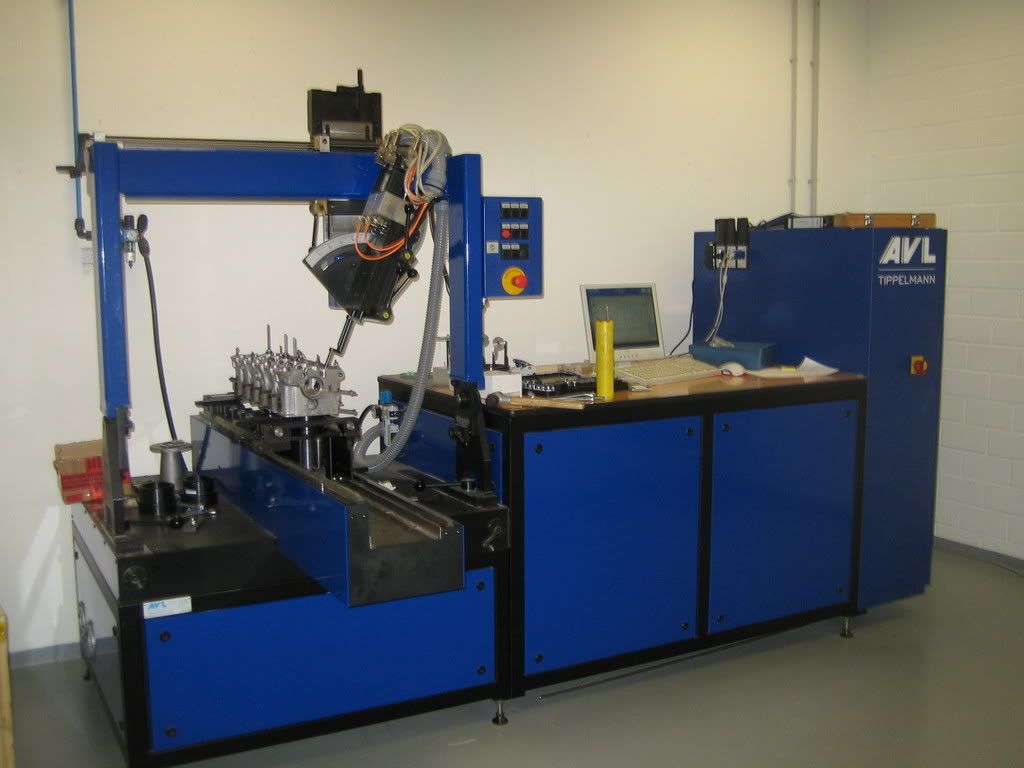
I've used an AVL Tippelman flow bench, which cost in the order of 300,000 Euros and cost 7500 euros to calibrate/validate a few months ago :shock:
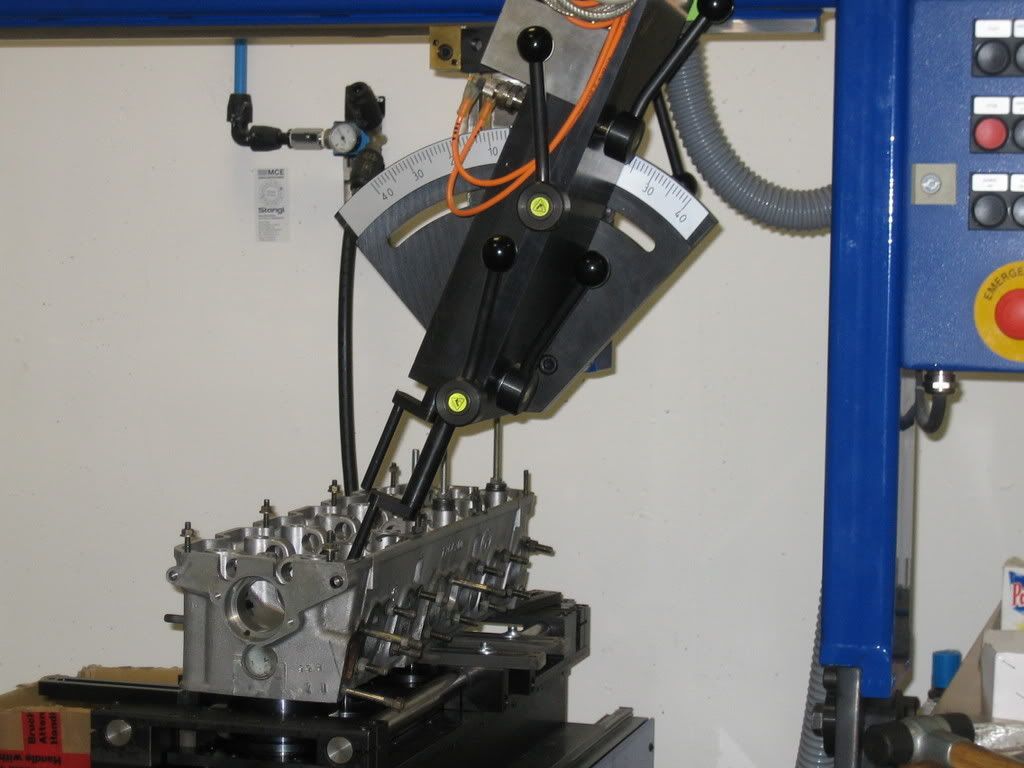
The mammoth flow bench measures flow and motion, broken down into the components of swirl and tumble.
Image
The BMW M20 series use a very shallow angle hemi (2 X 22 degrees) with slightly offset valves- BMW called it their 'Drei Kugel wirbel kammer' which is a fancy way of saying it generates alot of motion. During testing I found the amount of motion generated for the level of flow impressive.
Image
These engines were fitted in late 1970s and 1980s BMW 3 series, and they produce more motion in swirl than a modern E90 (expected) but suprisingly more Tumble also. This is suprising as Motion is what modern car manufacturers use indirectly in their armory to meet emission for rapid catalyst light off and in cylinder EGR tolerance/charge dillution. I would put money on the fact that the M20 and M30 BMWs produced alot more in cylinder motion while disturbing outright flow little, when compared to era contemporaries, such as the Alfa V6 2 valve, the Porsche 911, the Mercedes M110 (2.8 litre twin cam) which are all quiescent with the valves on the centreline of the combustion system.
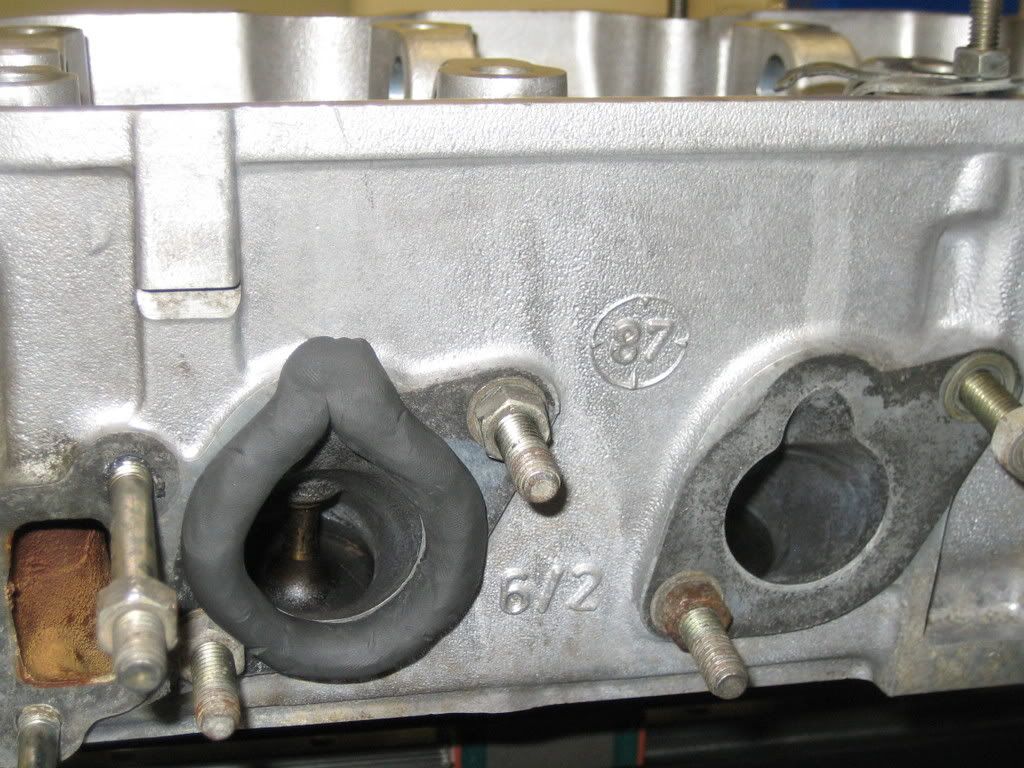
For the intake I moulded a bell mouth to minimise intake losses/invalidating the results
Image
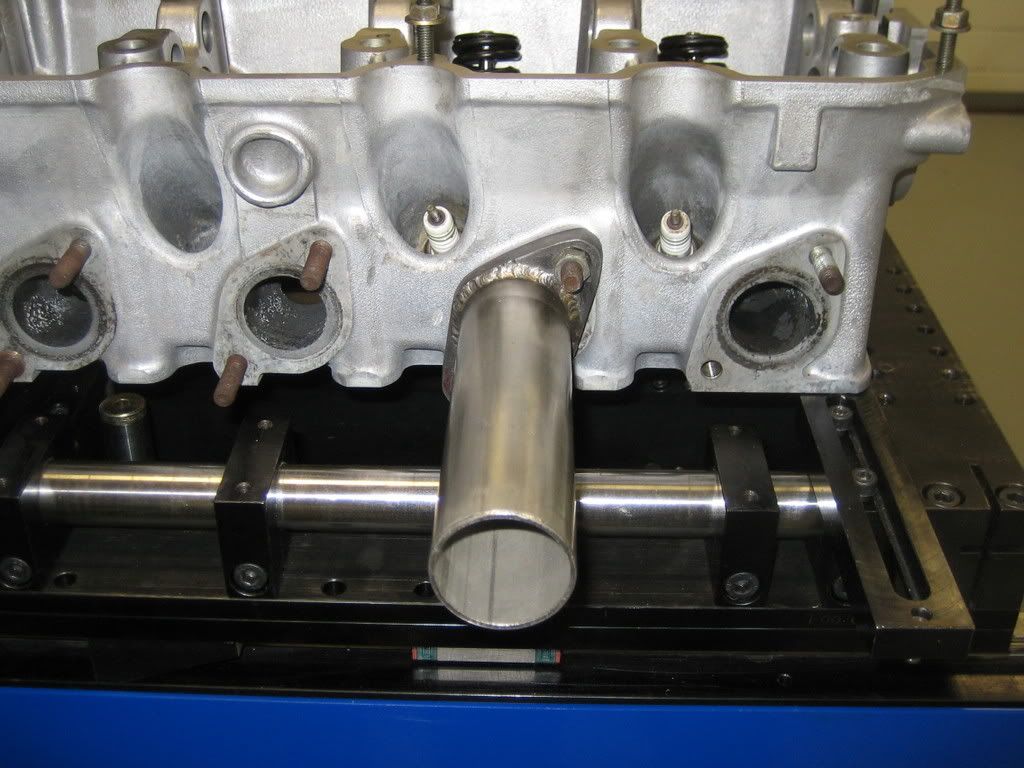
For the Exhaust I made up a diffuser pipe for the same reason
Image
Image
Automated valve opener makes my job easy :wink:
In terms of pressure drop, I commnly used the OEM industry standard of 50 mbar.
This equates to about 20 inches of water. I'm in the process of buying a small Superflow 120 and wanted to validate it against this AVL rig. I measured the same cylinder head for both intake and exhaust at pressure drops ranging from 10 inches of water all the way up to 33 inches and compared the flow coefficient results. This is perhaps subject for another post, but I found that there was some difference with these cylinder heads at higher pressure drops versus lower mainly at high valve lifts/high flow rates (above 12mm of lift). This may be different if testing an engine of a bigger cylinder capacity/higher flow capability.
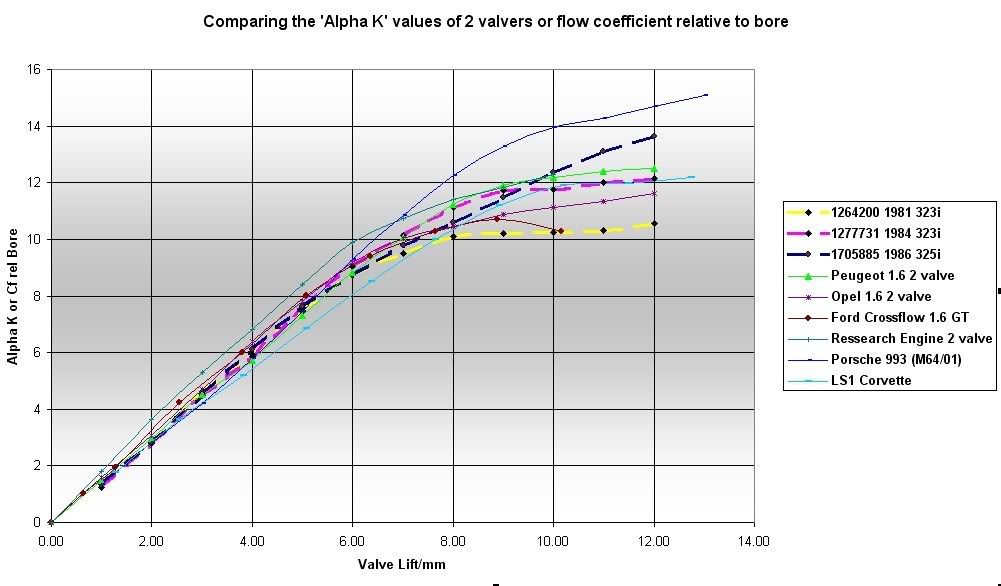
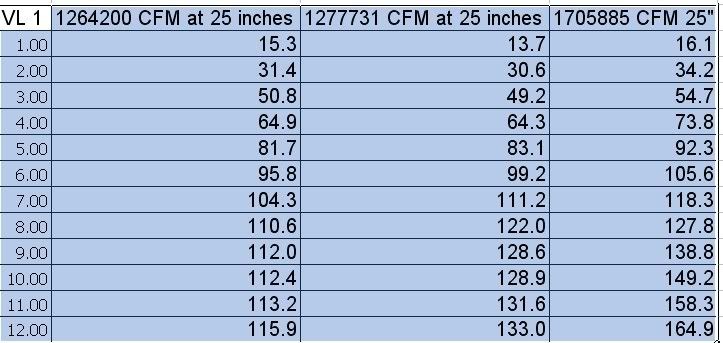
All in all there are 3 variants of the BMW M20 series, which affcionados will be aware of, the 1970s 323i head-casting number 1264200
the 1980s 323i, head casting number 1277731
and the mid to late 1980s 325i casting number 1705885. Each of these I tested and changed the bore sizes significantly to see the sensitivity to 'bore shrouding' [ When involved in the Jaguar and Aston Martin V8 development I found those engines very sensitive to bore size-effecting flow significantly]. The M20 engine isn't sensitive to bore shrouding. This is probably because
1) the engine is a 2 valve so flow from another intake valve doesnt shroud
2)the included valve angle is big enough to not interact with the side of the bore
3)The valves, although big (0.5 Bore intake), could probably be made bigger for the bore size
With this in mind, if tuning the M20 I would try to take advantage of this and fit larger valves. Only problem being is that if 45mm inlets are fitted and the inlet valve is lifted over 2mm at TDC with conventional cams the intake and exhaust usually clash. I'm currently looking into this issue :wink:
And finally let me post the results
Image
'Alpha K' or Flow Coefficient relative to bore size shows how good an engine is at filling its cylinder. Unlike CFM you can compare engine to engine, regardless of capacity. In the comparison plots I've show some notably good flowing 2 valvers (including the LS1 Vette engine). For the design compromises involved the LS1 is very repsectable but gets most of its flow through sheer size of the ports. Unfortunately this means that the gas velocities are quite low. These's always a compromise of gas velocity, in cylinder motion and outright flow. The Peugeot is 2 valver is the one that suprised me the the most as that engine I believe doesn't have inclined/angled valves at all. I've also included some old legends such as the 1.6 GT Ford Cross flow engine from the 1970s for reference. Out of the BMW stuff tested, I would say that the 1277731 BMW head cuts it pretty well compared to the few 2 valvers out there today and the 1705885 325i is quite good indeed. The Porsche 911/993 (last of the air cooled) show what is possible for a road engine. This head doesn't produce much in cylinder motion at all but at high lift flows almost like a reasonable 4 valver (it's a relatively large angle classical hemi). From my experience, I would say that at high valve lifts an 'Alpha K' of 16% represents an exceptionally good 2 valve head feeding a cylinder. 11-12% is pretty good going at high lifts, and anything around the 10% is a well developed road port for good cylinder filling.
Image
Finally, I'm showing flow coefficient relation to the Inner seat diameter.
This figure ignores how well a port can feed a cylinder and purely focuses on just how good that port is when considering the ISD size. Both the '731' and '885' ports are very accomplished and compare favourably even with a modern LS1 cylinder head. It also outlines the inferiority in this company of the '200' early 3 series port, and should hopefully bring home the folley in people who continue to pedal these cylinder heads for high performance/high capacity M20 conversions. Forget it. The '885' head casting is the undisputed best. Just to keep an eye on port velocities however at 6000 rpm peak powerspeed and taking into account the cylinder capacity, I calculate the following for the '200', '731' and '885' respectively:93m/s, 76m/s and 77 m/s the last two are lower than I had expected. I usually design ports for a velocity in the 'trouser leg' of over 90 m/s. You can move the compromise towards flow perhaps (making them bigger), if the design of the port won't deliver. The worst aspect of the M20 is the low roof of the port close to the valve seat.
And for all those who are used to CFM, I've converted my figures to CFM- using 25 inches of water as a reference:
Image

Re: BMW M20 flow testing-results!

Posted: Sun Dec 16, 2007 3:32 pm
by oakey
I wish I understood all this better :? lol Fantastic write up with loads of info (from what I understood of it).

So what work would you suggest be done to a cylinder head on a 2.7 stroked m20 for optimum top end power? And can you do it? winkeye

Re: BMW M20 flow testing-results!

Posted: Sun Dec 16, 2007 3:54 pm
by Ant
It all backs up what we've been saying for the last 6 years or so, the M20 885 casting betters the industry standard for its era of production.

I've always maintained that a porting/polish job on these was the last modifiaction to be carried out, as its bang for buck value is far lower it terms of gains for the expenditure than most would believe.

Good info fella, stickied :thumb:

Re: BMW M20 flow testing-results!

Posted: Sun Dec 16, 2007 4:06 pm
by maxfield
Awesome! Even though I don't understand most of it.

Re: BMW M20 flow testing-results!

Posted: Sun Dec 16, 2007 6:13 pm
by MarquisRex
Hi Oakey and Ant, thanks for the compliments!
Th mods I have in mind will be tested thoroughly. My Head was supposedly done by a rude reknowned specialist in the West country some years ago. I got a rubber moulding done of the port at the time, and now looking back after what I have learned since then, I wouldnt' have done what he did.
I have sectioned an old 885 head in both planes and have some ideas and i hope to test these ideas fastidiously.
My application is more difficult than most as I intend to grow my M20 out to possibly 3.1 litres and design my own camshaft.
Briefly -what I intend to test-if I ever make the time is:
-SHortening the valve guide- so that the valve guide to valve length ratio is like a modern car-say a BMW V12 or M40,
-removing the valve stem shroud,
-using bigger valves
-and seeing if I can do something about the valve clash when I design hairy cams,
-getting the better flow area via fattening the port instead-seeing if there is a tradeoff

The flow velocity of the M20 seems to be fastest at the bottom short side of the port, so I wanted to increase the area here to even things out-unfortunately with the 885 this is precisely where there is no space to do so!

If the 2.7 capacity will be retained- its a little more difficult as you don't want to savagely increase port areas and lose port velocities willy nilly. May be some of what I learn for my 3.1 project can be applied to a 2.7 litre.
The problem is time, and the fact I'm not a machinist.
BTW I've NOT been impressed by the aftermarket in the UK , most of whom don't know what they're on about and argue/patronise me, when I design and develop ports for a living :D

Re: BMW M20 flow testing-results!

Posted: Sun Dec 16, 2007 8:19 pm
by Turbo-Brown
Wowzers! That's one fantastically interesting post, top man! :D

Can I ask a really dumb question (you've gotta be the person to ask!)

Is the very sharp intersection between the inlet valve seat and the port a feature designed to promote something-or-other, or is it just a consequence of the geometry of the port and seat and something which could be removed to the benefit of flow?

EDIT> this is for the 325i head.

Cheers!

Alex

Re: BMW M20 flow testing-results!

Posted: Sun Dec 16, 2007 9:30 pm
by MarquisRex
Turbo-Brown wrote:Wowzers! That's one fantastically interesting post, top man! :D

Can I ask a really dumb question (you've gotta be the person to ask!)

Is the very sharp intersection between the inlet valve seat and the port a feature designed to promote something-or-other, or is it just a consequence of the geometry of the port and seat and something which could be removed to the benefit of flow?

EDIT> this is for the 325i head.

Cheers!

Alex
Not a dumb question at all, that intersection is just a feature of the design and assmebly/manufacture I would imagine.
I've put sharp angle changes on the short side modern ports, such as the Jaguar X type- to try to promote tumble-mainly for emissions and the constraints of the port cutter, but in this era, it's unlikely.
If I do get to accomodate a bigger valve seat, I will try to accomodate as smooth and large a radius as possible

Re: BMW M20 flow testing-results!

Posted: Sun Dec 16, 2007 11:47 pm
by e21Jason
Hi Rup

About time you turned up here and shared the knowledge

Jason

Re: BMW M20 flow testing-results!

Posted: Mon Dec 17, 2007 10:44 am
by reggid
to the OP how do you think a 731 head with 885 sized valves would go?

Re: BMW M20 flow testing-results!

Posted: Mon Dec 17, 2007 11:51 am
by MarquisRex
reggid wrote:to the OP how do you think a 731 head with 885 sized valves would go?
If you ignore both the Alpha K plots and the Flow coefficient plots for a second, focus on the CFM or outright flow numbers:
A 731 with larger 42mm inlets would tend to have similar outright flow numbers to the 885 up to about 6mm of valve lift at which point it will be more restricted (than an 885) and flow similar to a 731(perhaps marginally better).

You can see the effect port size has on flow, if you compare the 200 CFM figures with the 731, where they are very similar up to about 6mm valve lift and then the larger size port of the 731 casting impacts.

Re: BMW M20 flow testing-results!

Posted: Mon Dec 17, 2007 1:35 pm
by reggid
Do you think the 731 with 42mm intake valve and some reshaping of the port can be made to flow better than the 885?

The 885 seems to have a steeper port angle than the 731 would this mean that the 885 would flow more for the same valve and port size?

Which of the two do you think has the best flow potential?

Cheers

Re: BMW M20 flow testing-results!

Posted: Mon Dec 17, 2007 1:52 pm
by MarquisRex
reggid wrote:Do you think the 731 with 42mm intake valve and some reshaping of the port can be made to flow better than the 885?
I'm sure I could make the 731 flow better than a standard 885, yes, but the same modifications applied to an 885 would make it potentially unreachable.
reggid wrote: The 885 seems to have a steeper port angle than the 731 would this mean that the 885 would flow more for the same valve and port size?

Which of the two do you think has the best flow potential?

Cheers
I didn't think the 885 had a steeper port angle than the 731 as otherwise the injectors bosses would no longer be in the same position. I'd be happy to be proven wrong though- I've only sectioned the 885 head thus far.
A steeper port will tend to utilise the both the upper eyebrow of the valve flow area and lower short side more equally-therefore potentially flowing better. Its one of the mods I hope to look at.
The 885 casting has more metal around the ports so has more potential. It's particularly suited to bigger capacity conversions/upgrades of the M20.

Re: BMW M20 flow testing-results!

Posted: Mon Dec 17, 2007 2:05 pm
by Turbo-Brown
Be very interesting to see what difference smoothing off the transition from port to seat does make.

I imagine it's a mod that most of us could do with a reasonable amount of confidence that we're not going to make flow worse.

In my case, I'm quite interested in extracting as many bhp/psi from a boosted M20 as possible.

Re: BMW M20 flow testing-results!

Posted: Tue Dec 18, 2007 7:34 am
by reggid
maybe its a parallex error but the 731 ports look like they sit a bit lower down?

Image

Re: BMW M20 flow testing-results!

Posted: Wed Dec 19, 2007 8:50 pm
by Gunni
Haha,
that info is like gold.....

#1. Thanks for it.
#2. How offset are the Intake and Exhaust valves?
#3. What is the L/D Ratio?

How do the CFM numbers correlate to the two other pics you posted.

Also where are you located?

Re: BMW M20 flow testing-results!

Posted: Wed Dec 19, 2007 11:08 pm
by pacerpete
Rup is a very sick puppy who gets sexually excited by E21s ! :eek: Luckily i am normal and AMC pacers do it for me ! :D

Re: BMW M20 flow testing-results!

Posted: Wed Dec 19, 2007 11:29 pm
by MarquisRex
pacerpete wrote:Rup is a very sick puppy who gets sexually excited by E21s ! :eek: Luckily i am normal and AMC pacers do it for me ! :D
Hey Pete, how are you doing mate?
i'm still nerding around Germany! Sad thing is I'm starting to like it here!

Re: BMW M20 flow testing-results!

Posted: Thu Dec 20, 2007 12:47 am
by MarquisRex
Gunni wrote:Haha,
that info is like gold.....

#1. Thanks for it.
#2. How offset are the Intake and Exhaust valves?
#3. What is the L/D Ratio?

How do the CFM numbers correlate to the two other pics you posted.

Also where are you located?
*1 no worries
*2 Not much, visually looks to be less than 1 cm, i'd have to measure to be precise
*3 L/D ratio is the lift in mm divided by the inner seat diameter- it's a ratio that allows a valid comparison of cylinder heads from 5.7 litre Corvettes down to little 2 litre BMWs, for instance. (The valve lift requirements of different engine types vary quite alot)

I don't use CFM numbers, its just that the yanks seem to have made cubic Feet per minute something almost universal in the after market, so I converted my measurement data to this just to keep folks happy online. So the CFM numbers are DERRIVED from my measurements and the other plots

Re: BMW M20 flow testing-results!

Posted: Thu Dec 20, 2007 12:51 am
by MarquisRex
reggid wrote:maybe its a parallex error but the 731 ports look like they sit a bit lower down?

Image
If you did a section of both cylinder heads, and mapped out the centreline of the ports the port angle is almost identicle. It's confusing, because the 885 head biases its flow toward the upper side and makes it look higher, the 885 port are also bigger, but they're bigger on the short side also but in 3D terms relative to fixed points on bother heads (such as the injector boss positioning, the valve positioning, the rocker arm positioning etc etc) the port angle is about the same.

Nearly all typical ports flow FASTER on the short side than the upper side.
This is why new cylinder heads, like the New Mini or the BMW M52s etc etc, have ports with flat floors and curved tops, the area is increased on the flow to equalise the velocities top to bottom somewhat. Well that's my theory anyway.

Re: BMW M20 flow testing-results!

Posted: Thu Dec 20, 2007 2:58 am
by HairyScreech
this is some good work, and as a motorsport student and general pistonhead very interesting, do you have a 731 head to section as i have one here i would happily sacrafice in the name of science.

Re: BMW M20 flow testing-results!

Posted: Thu Dec 20, 2007 3:04 am
by Gunni
MarquisRex wrote:
Gunni wrote:Haha,
that info is like gold.....

#1. Thanks for it.
#2. How offset are the Intake and Exhaust valves?
#3. What is the L/D Ratio?

How do the CFM numbers correlate to the two other pics you posted.

Also where are you located?
*1 no worries
*2 Not much, visually looks to be less than 1 cm, i'd have to measure to be precise
*3 L/D ratio is the lift in mm divided by the inner seat diameter- it's a ratio that allows a valid comparison of cylinder heads from 5.7 litre Corvettes down to little 2 litre BMWs, for instance. (The valve lift requirements of different engine types vary quite alot)

I don't use CFM numbers, its just that the yanks seem to have made cubic Feet per minute something almost universal in the after market, so I converted my measurement data to this just to keep folks happy online. So the CFM numbers are DERRIVED from my measurements and the other plots
I´m more interested in understanding the relationship between your numbers and your then later calculated CFM numbers,
i.e what do your numbers mean,
we all want to try and stay metric ;)

Re: BMW M20 flow testing-results!

Posted: Thu Dec 20, 2007 9:57 am
by MarquisRex
Gunni wrote:
MarquisRex wrote:
Gunni wrote:Haha,
that info is like gold.....

#1. Thanks for it.
#2. How offset are the Intake and Exhaust valves?
#3. What is the L/D Ratio?

How do the CFM numbers correlate to the two other pics you posted.

Also where are you located?
*1 no worries
*2 Not much, visually looks to be less than 1 cm, i'd have to measure to be precise
*3 L/D ratio is the lift in mm divided by the inner seat diameter- it's a ratio that allows a valid comparison of cylinder heads from 5.7 litre Corvettes down to little 2 litre BMWs, for instance. (The valve lift requirements of different engine types vary quite alot)

I don't use CFM numbers, its just that the yanks seem to have made cubic Feet per minute something almost universal in the after market, so I converted my measurement data to this just to keep folks happy online. So the CFM numbers are DERRIVED from my measurements and the other plots
I´m more interested in understanding the relationship between your numbers and your then later calculated CFM numbers,
i.e what do your numbers mean,
we all want to try and stay metric ;)
CFM stands for cubic feet per minute, the equivalent metric is cubic metres per second. To convert from one to another, divide CFM by 2118.88 to get metres per second. CFM or Metres cubed/second is an absolute measure of port flow and is highly dependent on the presssure drop you choose also (I used 50 mbar, yank racers like to use 62mbar or 28inches of water). It's unfair to compare a bigger port application CFM with a smaller one and also unfair to compare a port tested at one pressure drop with another at another pressure drop. You CAN do this if you use AlphaK or Cf rel ISD!
AlphaK or Flow coeficient relative to bore is a non dimentionalised unit so you can compare a sub marine engine with a lawn mower. Alpha K is a measure of how well he cylinder is being fed- as I indicated anything above 12% at high valve lifts is a pretty good 'sporty' port for a 2 valver and 16% is outstanding. For a 4 valver the equivalent values are about 16% and 20% (Honda S2000) respectively.The Flow coefficient relative to ISD (my second diagram) is relative to inner seat diameter. This also allows one to compare massive engines with tiny applications in a fair way but is more a measure of how good the port is relative to its own sectional size. SO you could have bad Alpha K but good Cf relative to ISD- would probably be because your valve size is too small, for instance. You could even have vice versa- i.e good Alpha K but poor Cf relative to ISD because your port design is poor.
I'm not about to post formula up of converting outright absolute flow rate to Flow coefficient- I'm very busy and packing to go to ENgland right now, only to say that the definition is Measured flow rate-divided by-ideal flow rate through an equivalent orafice.
I'm located in Germany near frankfurt (used to live in Warwickshire).

Hi Hairy Screech, I have a 731 cylinder head which I don't want to section because its a nice example (I'll use it as an ornament ;), if I got another cracked or scrap 731 I may do this. The 885 I had was a piece of crap, cracked and rewelded many times. I'll be doing my ports mod experiments on an 885 and I have 5 attempts left. If I'm not satisfied I may obtain another scrap 885. I have limited time however as I also have an E36/E46 M5X 325i and 328i head to test/analyse.
Anyway, I'm driving back to the UK for Christmas in a terribly underpowered Punto (I won it, don't ask!). Merry Christmas everyone

Re: BMW M20 flow testing-results!

Posted: Thu Dec 20, 2007 10:30 am
by reggid
MarquisRex wrote:
Gunni wrote:
MarquisRex wrote: *1 no worries
*2 Not much, visually looks to be less than 1 cm, i'd have to measure to be precise
*3 L/D ratio is the lift in mm divided by the inner seat diameter- it's a ratio that allows a valid comparison of cylinder heads from 5.7 litre Corvettes down to little 2 litre BMWs, for instance. (The valve lift requirements of different engine types vary quite alot)

I don't use CFM numbers, its just that the yanks seem to have made cubic Feet per minute something almost universal in the after market, so I converted my measurement data to this just to keep folks happy online. So the CFM numbers are DERRIVED from my measurements and the other plots
I´m more interested in understanding the relationship between your numbers and your then later calculated CFM numbers,
i.e what do your numbers mean,
we all want to try and stay metric ;)
CFM stands for cubic feet per minute, the equivalent metric is cubic metres per second. To convert from one to another, divide CFM by 2118.88 to get metres per second. CFM or Metres cubed/second is an absolute measure of port flow and is highly dependent on the presssure drop you choose also (I used 50 mbar, yank racers like to use 62mbar or 28inches of water). It's unfair to compare a bigger port application CFM with a smaller one and also unfair to compare a port tested at one pressure drop with another at another pressure drop. You CAN do this if you use AlphaK or Cf rel ISD!
AlphaK or Flow coeficient relative to bore is a non dimentionalised unit so you can compare a sub marine engine with a lawn mower. Alpha K is a measure of how well he cylinder is being fed- as I indicated anything above 12% at high valve lifts is a pretty good 'sporty' port for a 2 valver and 16% is outstanding. For a 4 valver the equivalent values are about 16% and 20% (Honda S2000) respectively.The Flow coefficient relative to ISD (my second diagram) is relative to inner seat diameter. This also allows one to compare massive engines with tiny applications in a fair way but is more a measure of how good the port is relative to its own sectional size. SO you could have bad Alpha K but good Cf relative to ISD- would probably be because your valve size is too small, for instance. You could even have vice versa- i.e good Alpha K but poor Cf relative to ISD because your port design is poor.
I'm not about to post formula up of converting outright absolute flow rate to Flow coefficient- I'm very busy and packing to go to ENgland right now, only to say that the definition is Measured flow rate-divided by-ideal flow rate through an equivalent orafice.
I'm located in Germany near frankfurt (used to live in Warwickshire).

Hi Hairy Screech, I have a 731 cylinder head which I don't want to section because its a nice example (I'll use it as an ornament ;), if I got another cracked or scrap 731 I may do this. The 885 I had was a piece of crap, cracked and rewelded many times. I'll be doing my ports mod experiments on an 885 and I have 5 attempts left. If I'm not satisfied I may obtain another scrap 885. I have limited time however as I also have an E36/E46 M5X 325i and 328i head to test/analyse.
Anyway, I'm driving back to the UK for Christmas in a terribly underpowered Punto (I won it, don't ask!). Merry Christmas everyone
thanks for your reposnses.

it would be interesting to see how the 885 fairs against an m50 head in relative and absolute terms!

Re: BMW M20 flow testing-results!

Posted: Fri Dec 21, 2007 12:32 pm
by daimlerman
The next stage with my 2.7 is to try an improved cylinder head.I want to retain the low down torque that I have so will be using a 323i cam in a 731 head.Pistons are stock eta so the 731 head suits them.I plan on using the larger valves and would like your advice on any general areas that I can improve the casting.Please bear in mind that I am an enthusiast rather than an ex university qualified person!!

Re: BMW M20 flow testing-results!

Posted: Sun Jan 13, 2008 5:11 am
by hcetretsam
very interested to see what mods can be done to 885 that are worth while

Re: BMW M20 flow testing-results!

Posted: Mon Aug 18, 2008 11:02 am
by reggid
test pressure 10" H20

Int Stock 885 /Int Alpina 885............Exh Stock 885 /Exh Alpina 885 (CFM)

0.050" 15.5 / 15.5............12.1 / 11.7
0.100" 33.1 / 31.7............26.1 / 23.3
0.200" 65.4 / 63.4............53.4 / 51.2
0.300" 92.7 / 90.4............68.8 / 74.3
0.400" 108.4 / 109.1.........74.4 / 82.8
0.500" 108.3 / 113.8.........75.6 / 86.7
0.600" 111.2 / 114.4.........76.1 / 91.8
0.700" 113.4 / 116.5.........76.1 / 93.0

Alpina Inlet has more or less just been smoothened and lightly ported offers ~3% flow advantage (111.2 vs 108.4) over stock at 11.5mm lift.

Alpina Exhaust has been gasket matched and more extensive porting and offers ~13% improvement (84.8 vs 75.0) at 11.5mm lift.

Image

Std Exh/Int ratio = 69%

Alpina Exh/Int ratio = 76%

Looks like Alpina concentrated on the exhaust to get the ratio up

Re: BMW M20 flow testing-results!

Posted: Sun Sep 06, 2009 8:47 pm
by Forced_Firebird
Just want to start by saying excellent write-up. always a hoot reading what other scientific engine builders have to say about findings :)

Out of curiosity, have you, or are you planning on flowing the heads with the manifolds attached? The heads on my Firebird (from a 3.5l G6 Malibu engine) flow stock in the neighborhood of 270cfm bare (clay on the ports) and in the 170's with the manifolds/TB attached minus the throttle plate (intake and exhaust are almost identical with manis). So the real-world numbers are quite different and attaching the manifolds change the way they need to be ported as well.

One can't argue enough about the floors in most engines (usually the short side). Changing the short side often has the most effect on flow and is often where novices go wrong.

-John

Re: BMW M20 flow testing-results!

Posted: Sat May 22, 2010 2:35 am
by HairyScreech
did anything really get done with these numbers in the end?

just looking to strike out down this path myself and free up some of out lost hp in the 2.8s.